
NeBula
From Search for Life in our solar system to terrestrial exploration of Extreme Environments
Is (or was) there life beyond Earth? The answer to this question lies underground on planetary bodies in our solar system. Planetary subsurface voids are one of the most likely places to find signs of life (both extinct and extant). Subsurface voids are also one of the main candidates for future human colonization beyond Earth. To this end, TEAM CoSTAR is participating in the DARPA Subterranean Challenge to develop fully autonomous systems to explore subsurface voids with a dual focus on planetary exploration and terrestrial applications in search and rescue, mining industry, and AI/Autonomy in extreme environments.

NeBula
NeBula Autonomy Solution
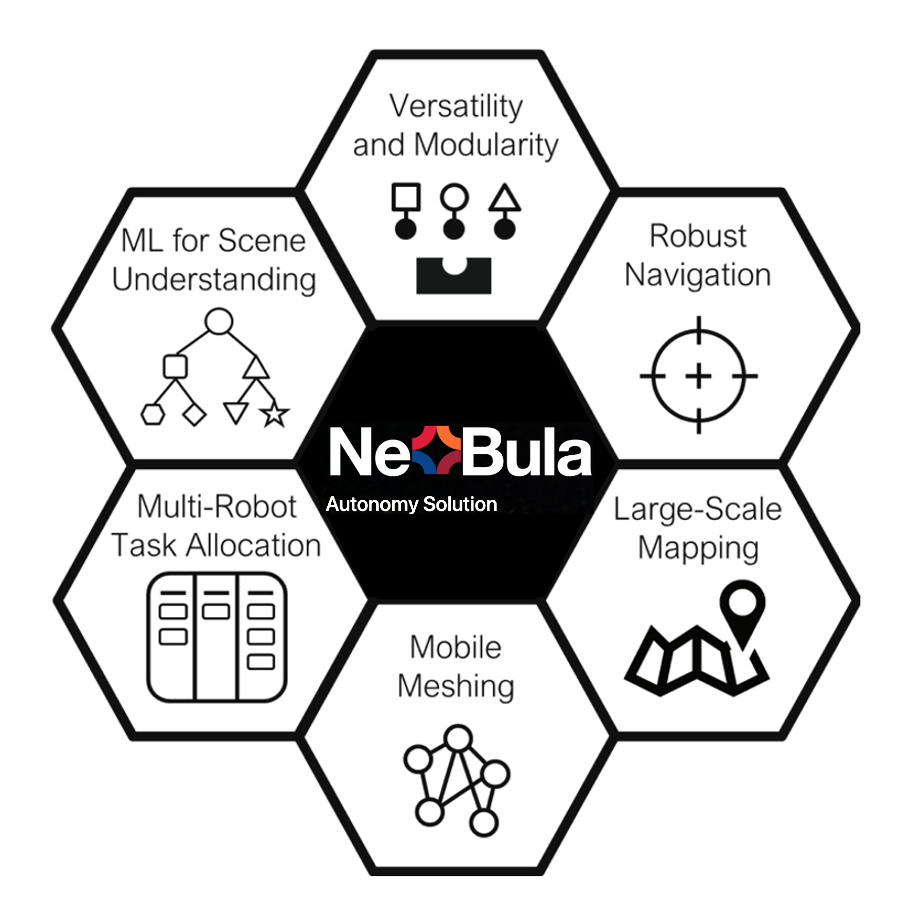
To address various technical challenges across multiple domains in autonomous exploration of extreme environments, we develop a unified modular software system, called NeBula (Networked Belief-aware Perceptual Autonomy). JPL’s NeBula is specifically designed to address stochasticity and uncertainty in various elements of the mission, including sensing, environment, motion, system health, communication, among others.
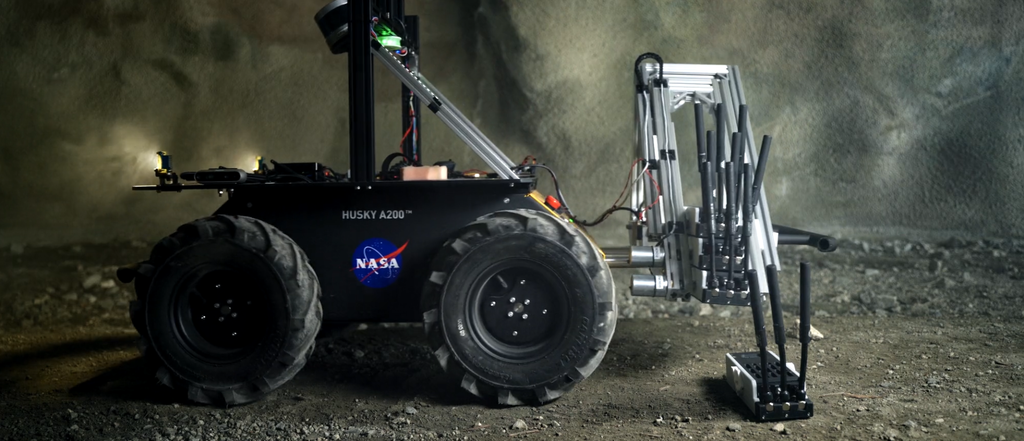
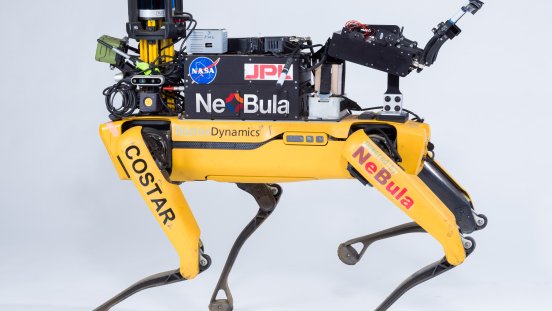
NeBula has been implemented on multiple heterogeneous robotic platforms (wheeled, legged, tracked and flying vehicles), was demonstrated across various terrestrial or planetary-analogue missions, and has won a DARPA Challenge focused on robotic autonomy.
Verifiable autonomy under extreme conditions:
Nebula develops an autonomy architecture that translates the mission specifications into single- or multi-robot behaviors. NeBula quantifies risk and trust in this process by taking uncertainty in robot motion, control, sensing, and environment into account when abstracting activities and behaviors. As a result it provides quantitative guarantees on the performance of the autonomy framework under environment assumptions.
Modularity and mobility-based adaptation:
Nebula focuses on a modular design to enable adaptation to various mobility platforms (legged, flying, wheeled, and tracked) and various computational capacities.
Resilient Navigation:
Nebula develops a GPS-free navigation solution resilient to perceptually-challenging conditions such as variable illumination, dust, dark, smoke, and fog. The solution relies on degeneracy-aware fusion of various complementary sensing modalities, including vision, IMU, lidar, radar, contact sensors, and ranging systems (e.g., magneto-quasi static signals and UWBs). The system can autonomously switch between and fuse different sensing modalities based on the environmental features.
Single- and multi-robot SLAM and dense 3D mapping:
Nebula develops GPS-denied large-scale (several Km+) SLAM solvers and 3D mapping frameworks using confidence-rich mapping methods to provide precise topological, semantic-based, and geometrical maps of the extreme environments such as subsurface caves and mine networks under variable and challenging illumination conditions.
Extreme Traversability:
NeBula develops solutions that have enabled robots to autonomously traverse extreme terrains with various traversability-stressing elements such as loose and slippery surfaces (sand, water), muddy terrains, rock-laden terrains, high-slope areas, and autonomously go up and down stairs in terrestrial applications.
Multi-robot operations and mesh communication:
Nebula by design can be implemented on multi-robot systems to enable faster and more efficient missions. Robots can also deploy static radios to create a wireless mesh network backbone. For inter-robot communication, this relies on resilient mesh networking solutions that can accommodate intermittent communication links between robots.
Autonomous skill learning:
Nebula applies and extends reinforcement learning and in general machine learning methods to enable fast and safe robot motions in perceptually-degraded environments.
Robot Ecosystem
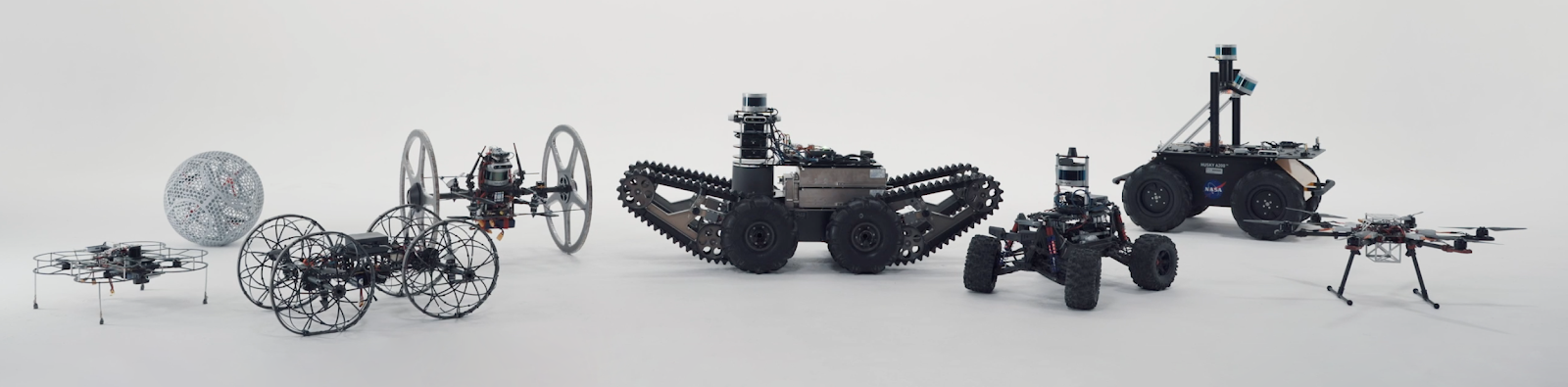
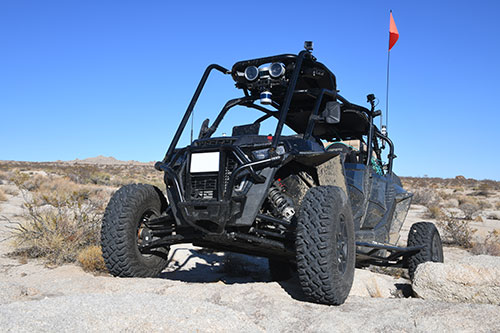
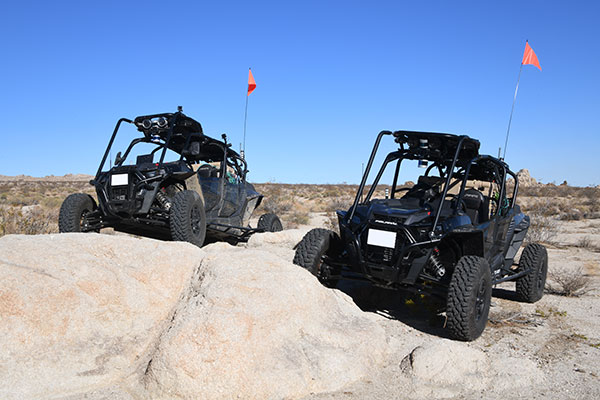
Networked control of a multi-robot system: Nebula focuses on a modular design to enable adaptation to various mobility platforms (legged, flying, wheeled, and tracked) and various computational capacities. It is designed to autonomously coordinate and allocate tasks among a team robots with heterogeneous capabilities. It dynamically maps robot capabilities to their roles during the operation.

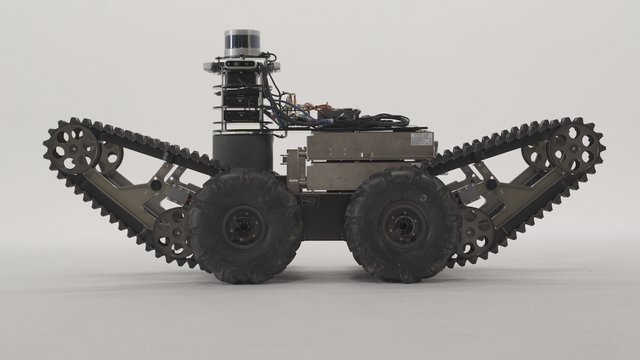
Tracked robots
Tracked robots with controllable flippers.
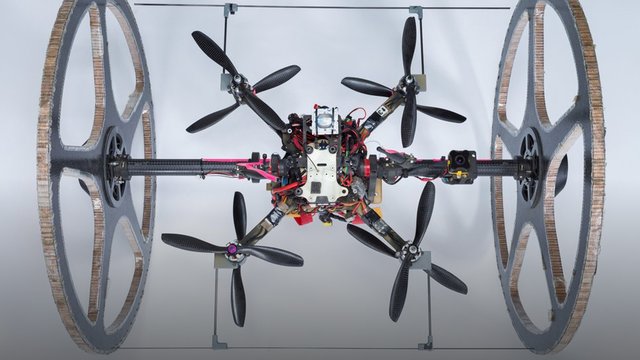
Tracked robots
Tracked robots with controllable flippers.
Robot Ecosystem Gallery
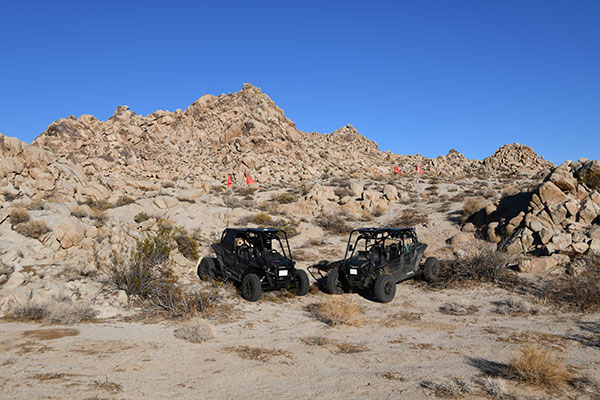
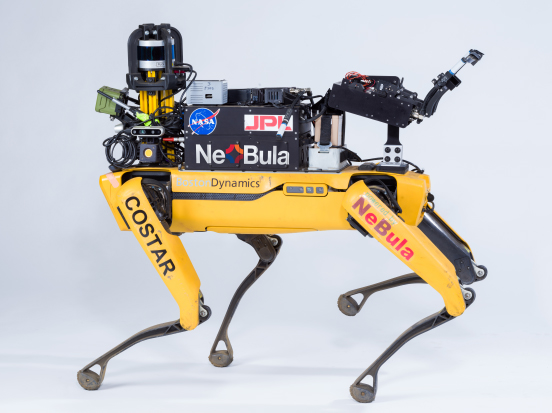


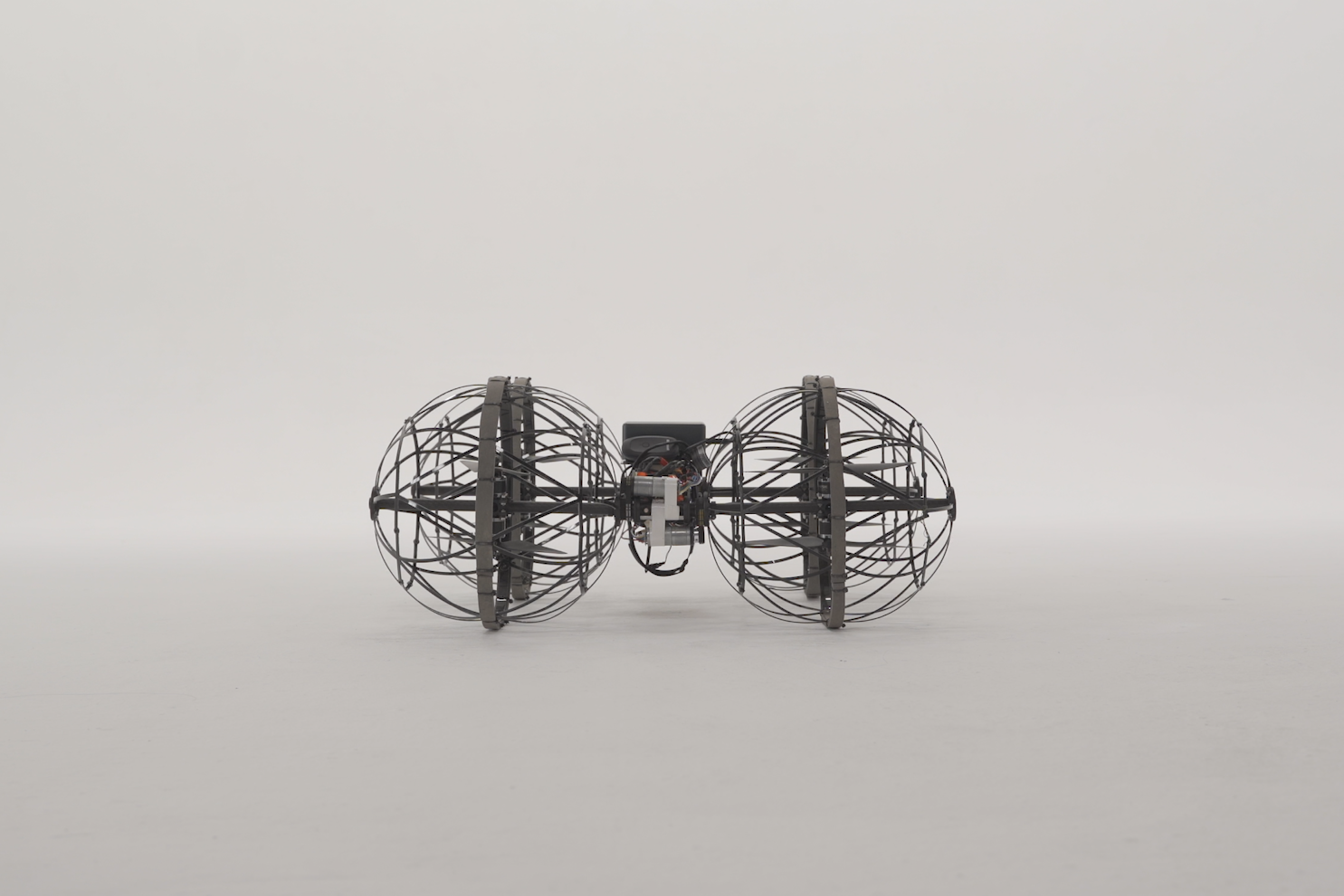
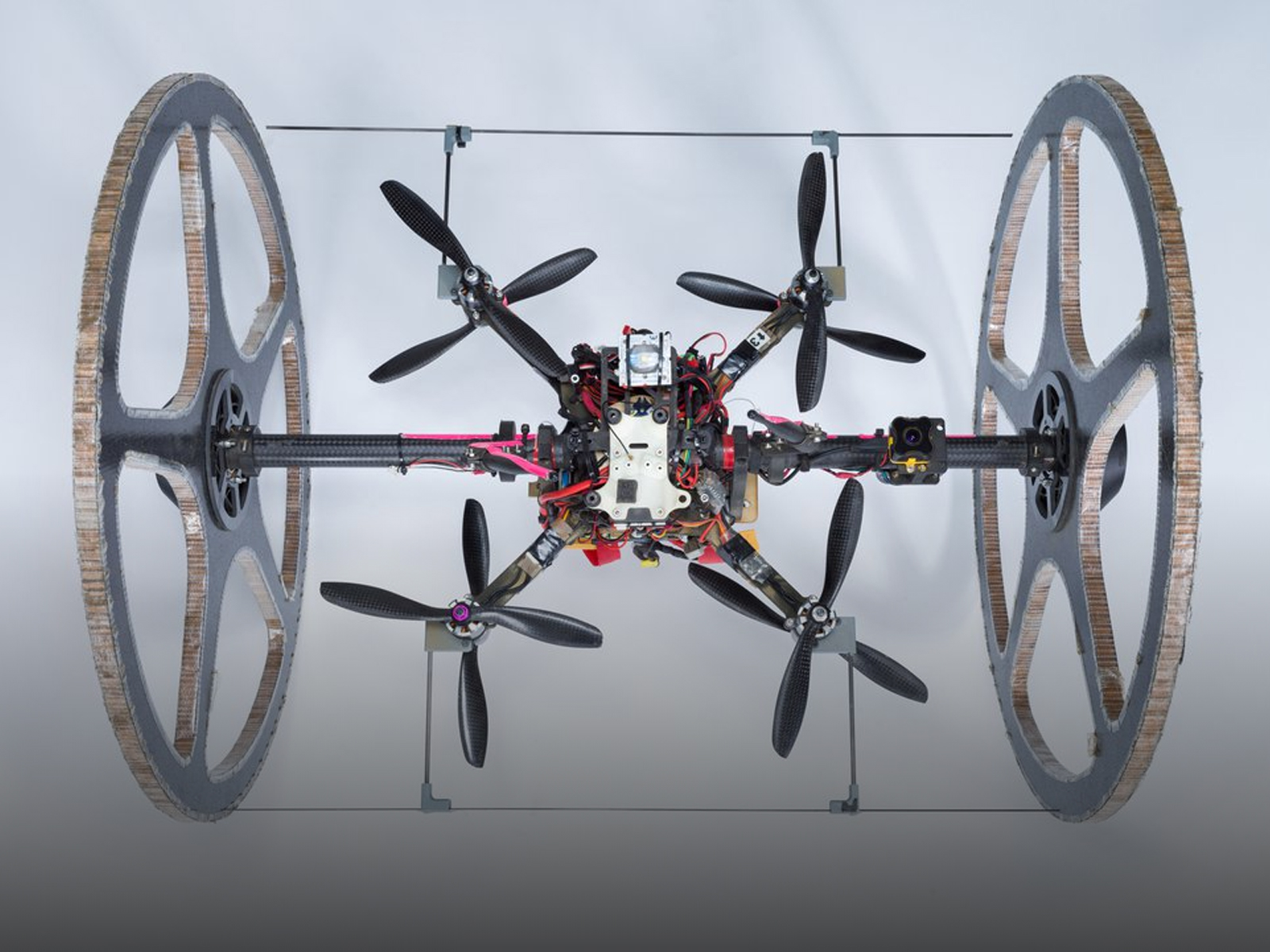
Watch Us in Action
Autonomous Spot: Long-Range Exploration of Extreme Environments
We Are Team CoSTAR
Search for Life: NASA JPL Explores Martian-Like Caves
CL#26-1084