
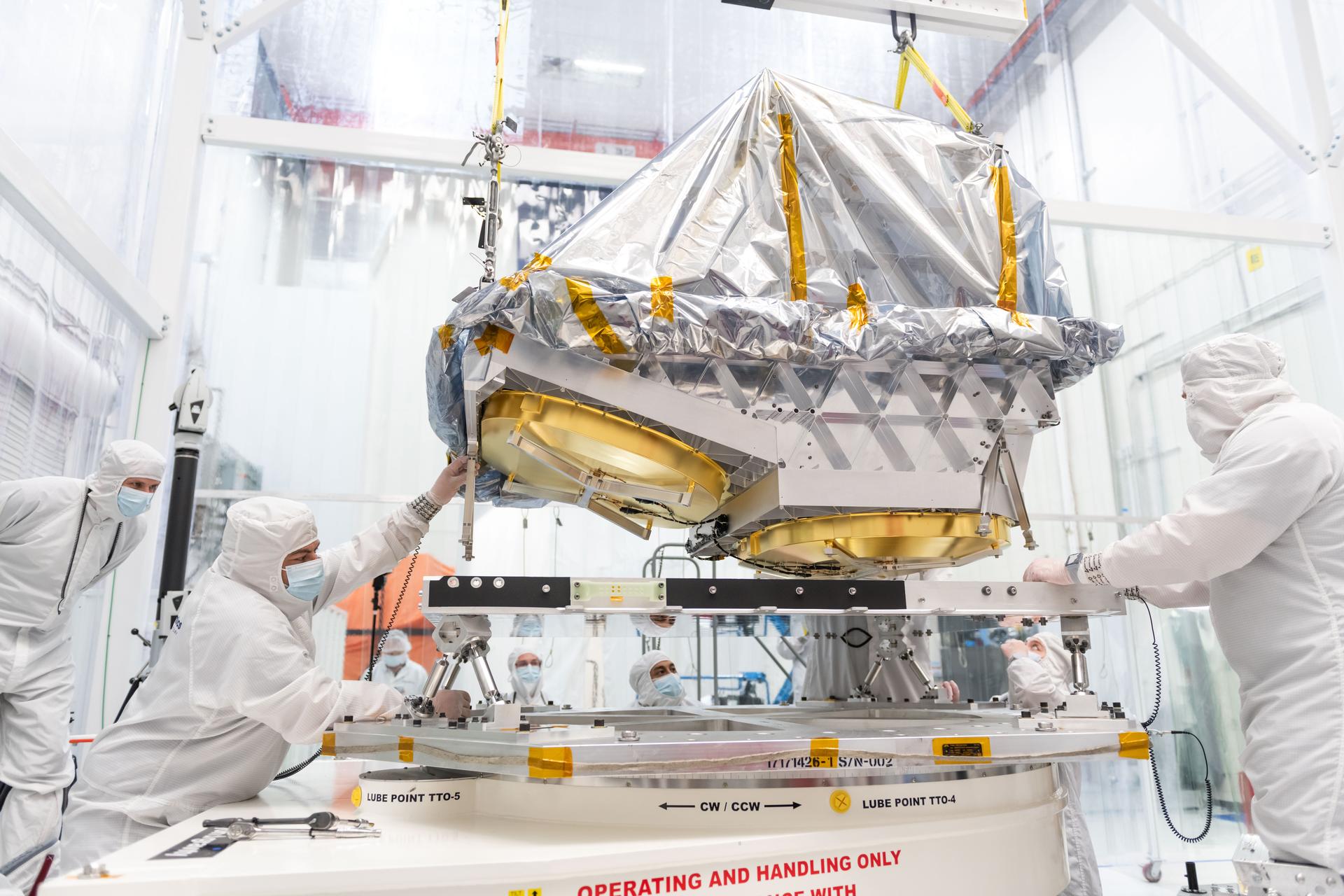
The Near-Earth Object (NEO) Surveyor — NASA’s first infrared space telescope purposely designed to discover potentially hazardous asteroids and comets — is undergoing integration and testing. With launch set for no earlier than September 2027, teams across the United States are hard at work building the spacecraft’s components, planning the kind of survey and science it will do, and developing the software to process the huge quantity of data the mission will generate.
In 2005, Congress tasked NASA with discovering potentially hazardous near-Earth objects, or NEOs, but many of these objects are difficult to find with ground-based surveys. Some are as dark as charcoal, others are tiny, and many lurk in the glare of the Sun, where ground-based optical telescopes can’t see. To mitigate this, NEO Surveyor is being custom-built to scan the solar system to detect objects that will glow in the infrared as they are heated by the Sun — as opposed to the optical light they reflect, which is what ground-based surveys measure — to provide enough advance warning for humanity to do something about them, if necessary.