
JPL
Careers
Education
Science & Technology
JPL Logo
JPL Logo
Mars
.1 min read

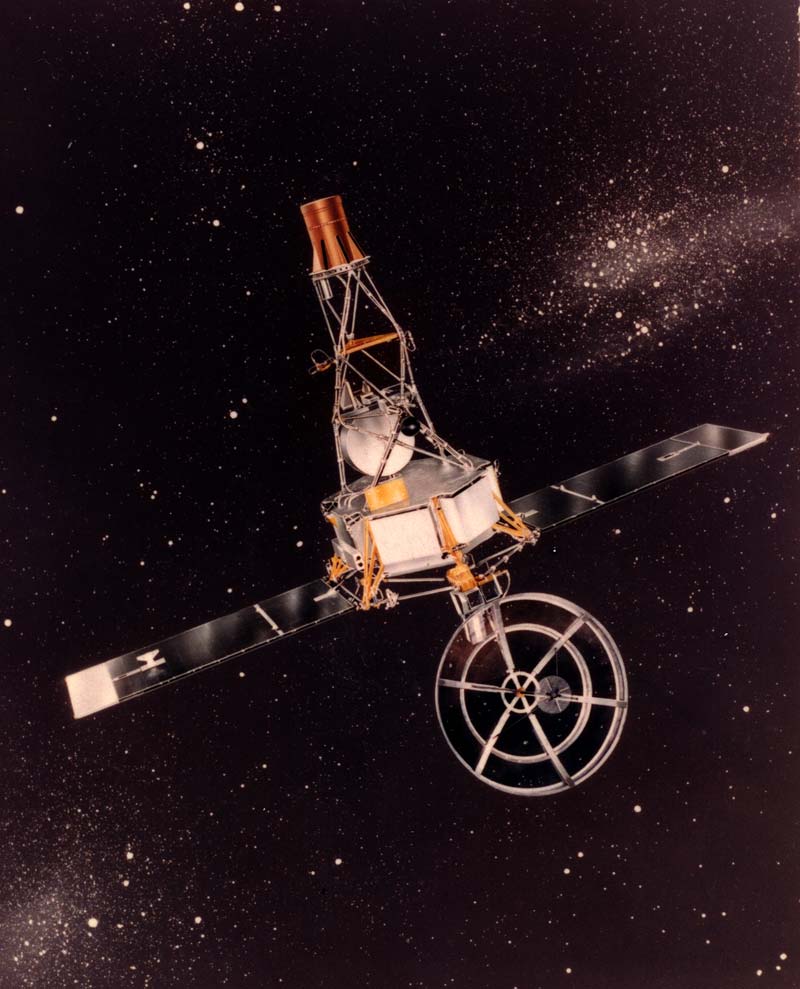
Mariner IV Fact Sheet

Jet Propulsion Laboratory https://www.jpl.nasa.gov/ Nov. 18, 1964

The Mariner IV spacecraft, which made the first close-up photographs of Mars last July 14, took more television pictures late yesterday--this time of black space--the National Aeronautics and Space Administration reported today.

The Mariner IV spacecraft, which made the first close-up photographs of Mars last July 14, took more television pictures late yesterday--this time of black space--the National Aeronautics and Space Administration reported today.

Project officials at the Jet Propulsion Laboratory, Pasadena, Calif. said Mariner's TV camera took and recorded 10-1/2 pictures during a 12-minute period shortly after 5 p.m. Pacific Daylight Time.

Five of the pictures of empty space are being transmitted to Earth so that scientists will have calibration information for comparison with the pictures of Mars. The comparison is expected to help in determining whether the haze or fog that appeared in some of the Mars pictures was indeed a planet feature or a flaw in the instrument.

The calibration sequence began at 1:30 p.m. PDT yesterday and included the transmission of eight commands to the spacecraft from the Goldstone Tracking Station in California.

The pictures were recorded on the first track of the tape which stored the Mars pictures 48 days ago when Mariner IV flew by the planet at an altitude of 6118 miles. Playback of the black space picture data began about seven o'clock last night and will continue through Wednesday night.

Mariner IV has flown 276 days since launch November 28, 1964. It is now more than 171 million miles from Earth, 11 million miles from Mars and has flown 381 million miles in its orbit around the sun.


818-354-5011

1964-0354

Related News

Mars.

NASA Pushes Next-Gen Mars Helicopter Rotor Blades Past Mach 1

Technology.

NASA Fires Up Powerful Lithium-Fed Thruster for Trips to Mars

Mars.

NASA’s Perseverance, Curiosity Panoramas Capture Two Sides of Mars

Mars.

NASA’s Curiosity Finds Organic Molecules Never Seen Before on Mars

Solar System.

NASA Shuts Off Instrument on Voyager 1 to Keep Spacecraft Operating

Technology.

NASA Unveils Initiatives to Achieve America’s National Space Policy

Asteroids and Comets.

NASA’s DART Mission Changed Orbit of Asteroid Didymos Around Sun

Mars.

NASA’s Curiosity Rover Sees Martian ‘Spiderwebs’ Up Close

Mars.

NASA’s Perseverance Now Autonomously Pinpoints Its Location on Mars

Mars.

NASA’s Perseverance Rover Completes First AI-Planned Drive on Mars

About JPL
Who We Are
Directors
Careers
Internships
The JPL Story
JPL Achievements
Documentary Series
JPL Annual Report
Executive Council
Missions
Current
Past
Future
All
News
All
Earth
Solar System
Stars and Galaxies
Eyes on the News
Subscribe to JPL News
Galleries
Images
Videos
Audio
Podcasts
Apps
Visions of the Future
Slice of History
Robotics at JPL
Events
Lecture Series
Speakers Bureau
Calendar
Visit
Public Tours
Virtual Tour
Directions and Maps
Topics
JPL Life
Solar System
Mars
Earth
Climate Change
Exoplanets
Stars and Galaxies
Robotics
More
Asteroid Watch
NASA's Eyes Visualizations
Universe - Internal Newsletter
Social Media
Accessibility at NASA
Contact Us
Get the Latest from JPL
Follow Us

JPL is a federally funded research and development center managed for NASA by Caltech.

More from JPL
Careers
Education
Science & Technology
Acquisition
JPL Store
Careers
Education
Science & Technology
Acquisition
JPL Store
Related NASA Sites
Basics of Spaceflight
NASA Kids Science - Earth
Earth / Global Climate Change
Exoplanet Exploration
Mars Exploration
Solar System Exploration
Space Place
NASA's Eyes Visualization Project
Voyager Interstellar Mission
NASA
Caltech
Privacy
Image Policy
FAQ
Feedback
Version: v3.1.0 - 9d64141
Site Managers:Emilee Richardson, Alicia Cermak
Site Editors:Naomi Hartono, Steve Carney
CL#:21-0018