
Blue Ghost Mission 2 Gets Stacked at JPL
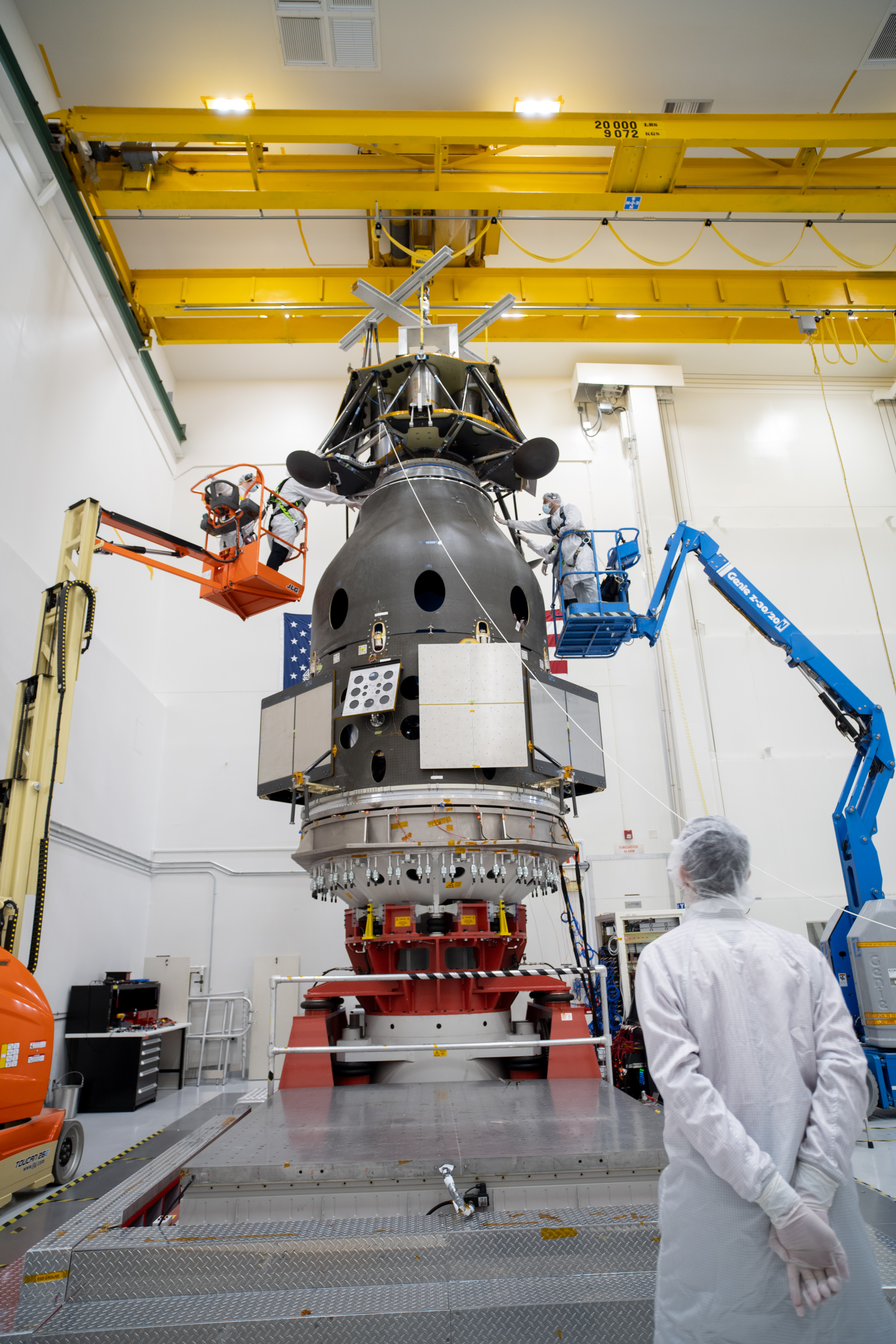
Figure A
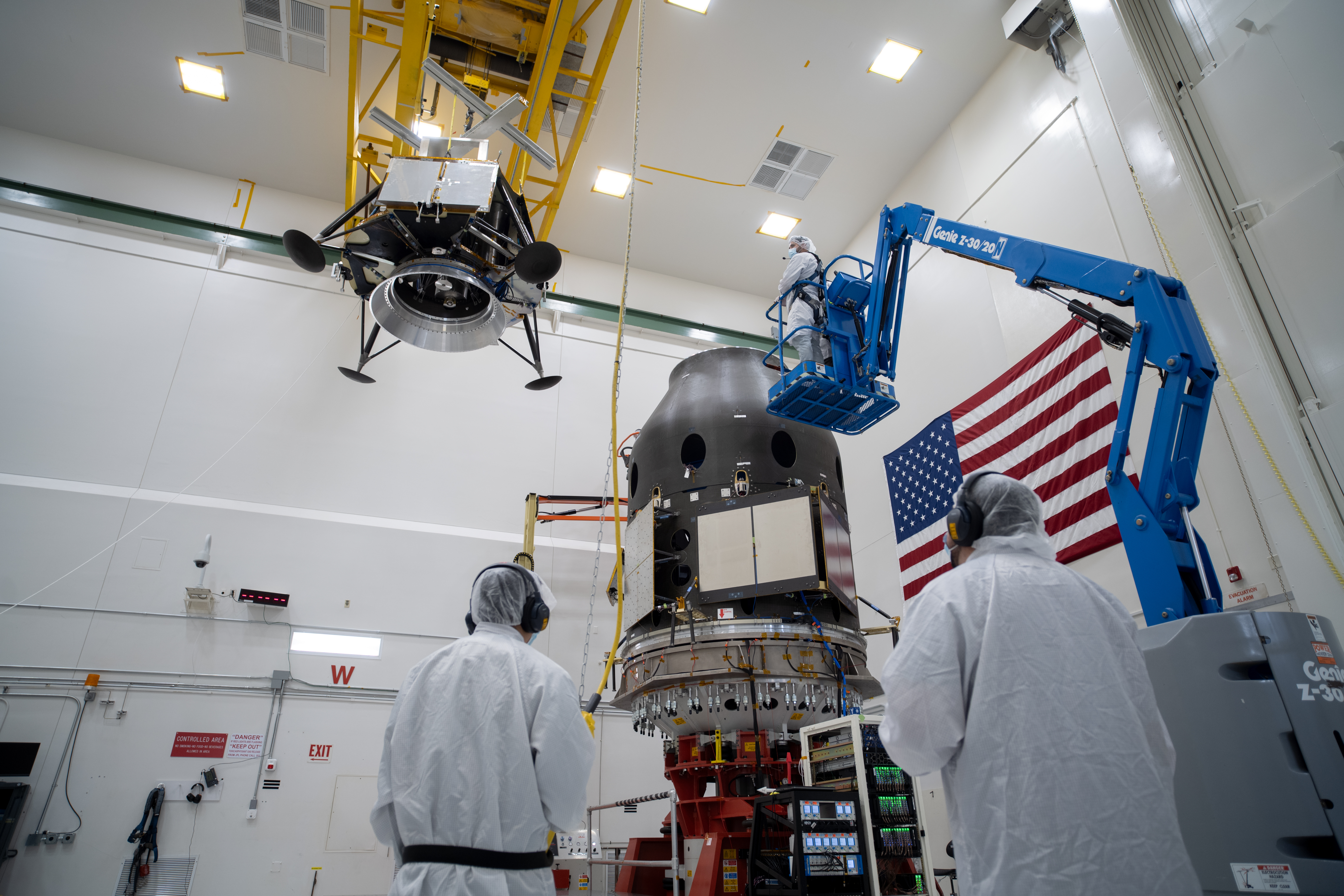
Credit: NASA/JPL-Caltech
Figure B
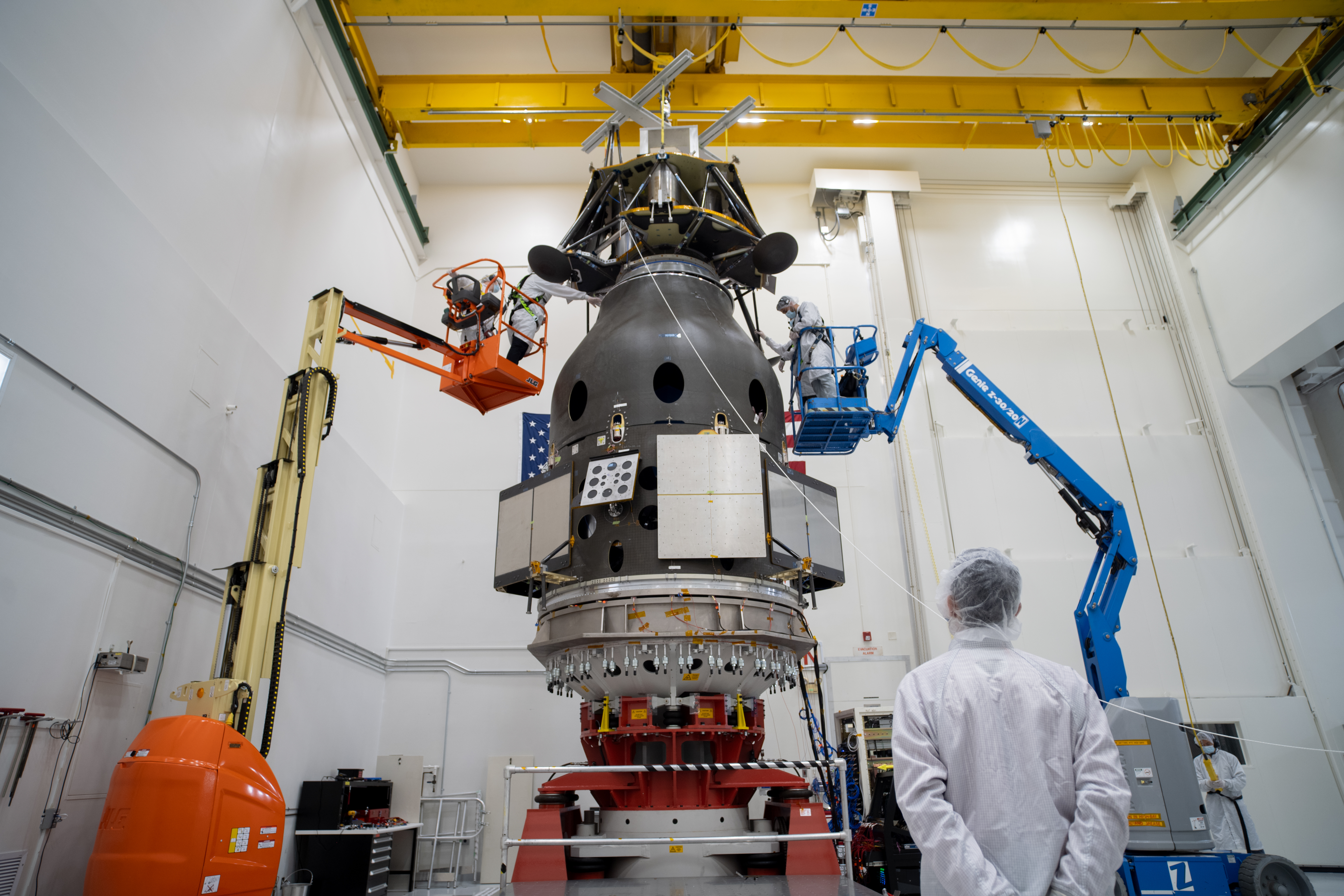
Engineers and technicians prepare full-scale models of the spacecraft for Firefly Aerospace’s Blue Ghost Mission 2 for environmental testing in a clean room at NASA’s Jet Propulsion Laboratory in Southern California in October 2025. They are securing the model of the Blue Ghost lunar lander atop the company’s Elytra Dark orbital vehicle, into which ESA’s (European Space Agency’s) Lunar Pathfinder communications satellite has been integrated. The structural qualification models of the spacecraft are used to prove the design is ready for space.
Standing 22 feet (6.9 meters) high, the towering full stack is being prepared for vibration testing, which assesses readiness to survive the stresses of launch. The “shaker table” in JPL’s Environmental Test Laboratory repeatedly rattled the stack in three directions while hundreds of sensors monitored the rapid movement.
Figure A shows the team moving the lander atop the stack.
Figure B shows another angle of the team prepping the full stack.
Set to head to the Moon’s far side in 2026, Blue Ghost Mission 2 is part of NASA’s CLPS (Commercial Lunar Payload Services) initiative. The Blue Ghost lander will touch down on the Moon’s far side, delivering payloads that include LuSEE-Night, a radio telescope that is a joint effort by NASA, the U.S. Department of Energy, and University of California, Berkeley’s Space Sciences Laboratory. A payload developed at JPL called User Terminal will test a compact, low-cost S-band radio communications system that could enable future far-side missions to talk to one another and to relay orbiters.
The ETL team also led environmental testing for Firefly’s Blue Ghost Mission 1 lander in 2024 ahead of its successful soft Moon landing in March 2025.
Credit: NASA/JPL-Caltech