JPL
Careers
Education
Science & Technology
JPL Logo
JPL Logo
Image

Frankenstein Galaxy

Jet Propulsion Laboratory https://www.jpl.nasa.gov/ July 11, 2016
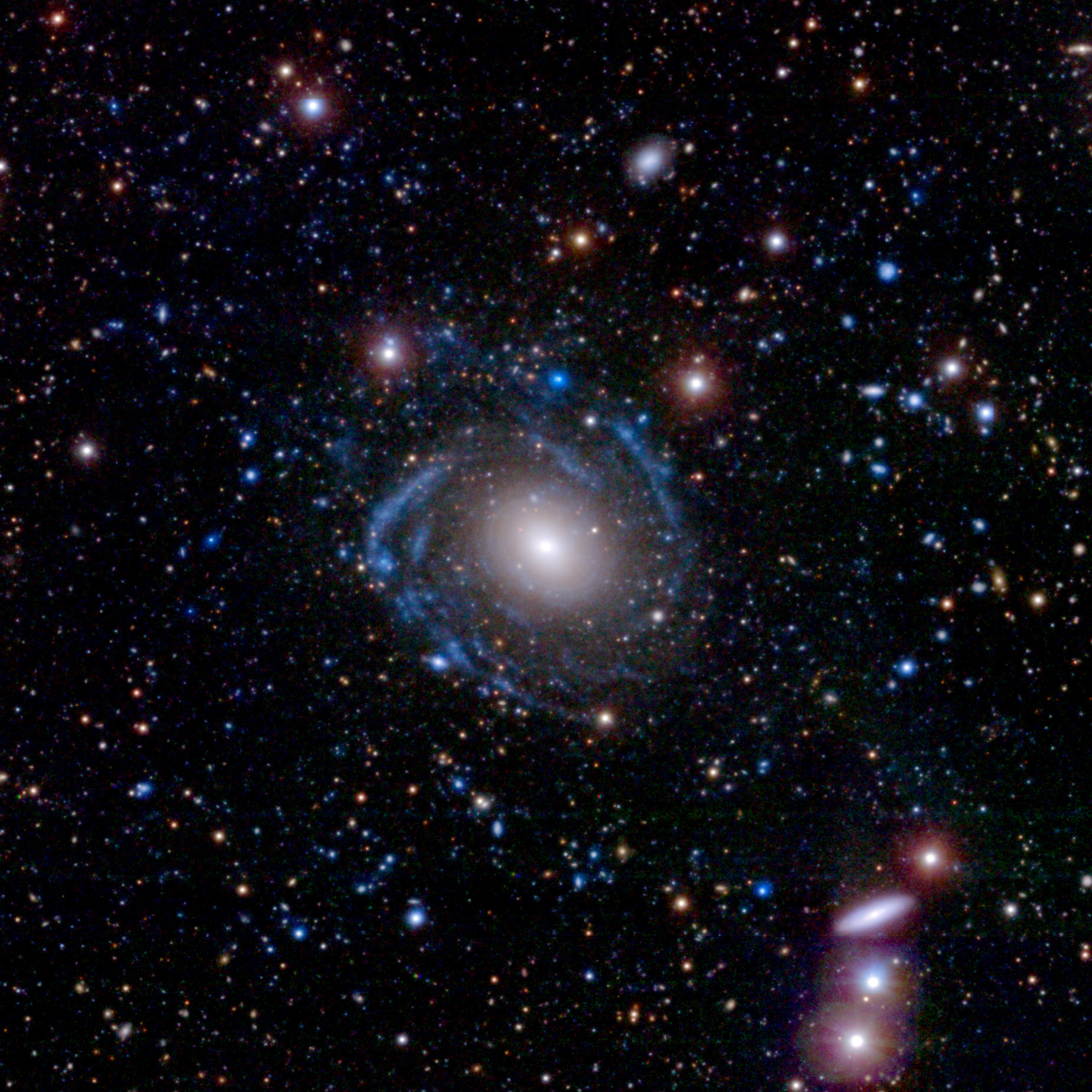
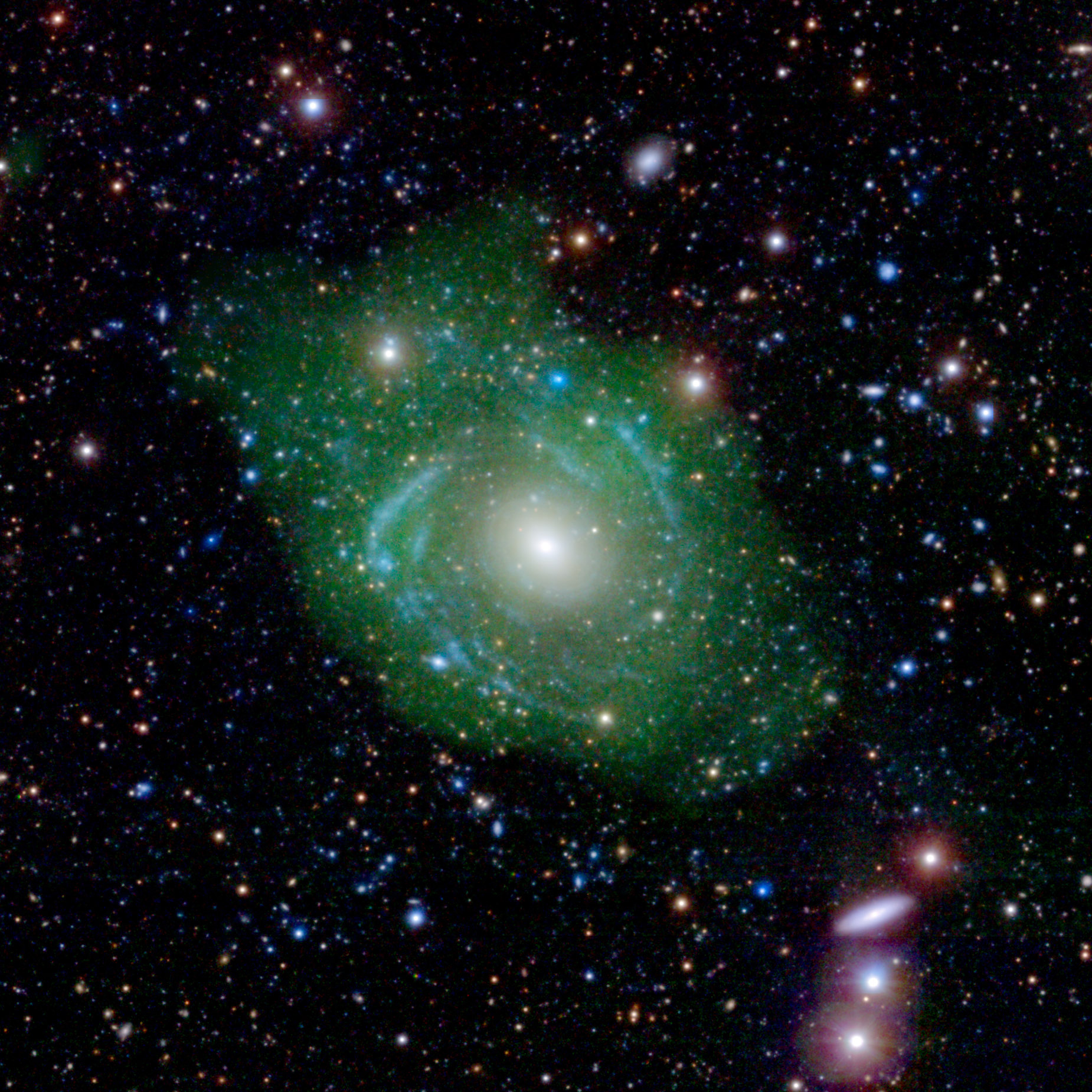
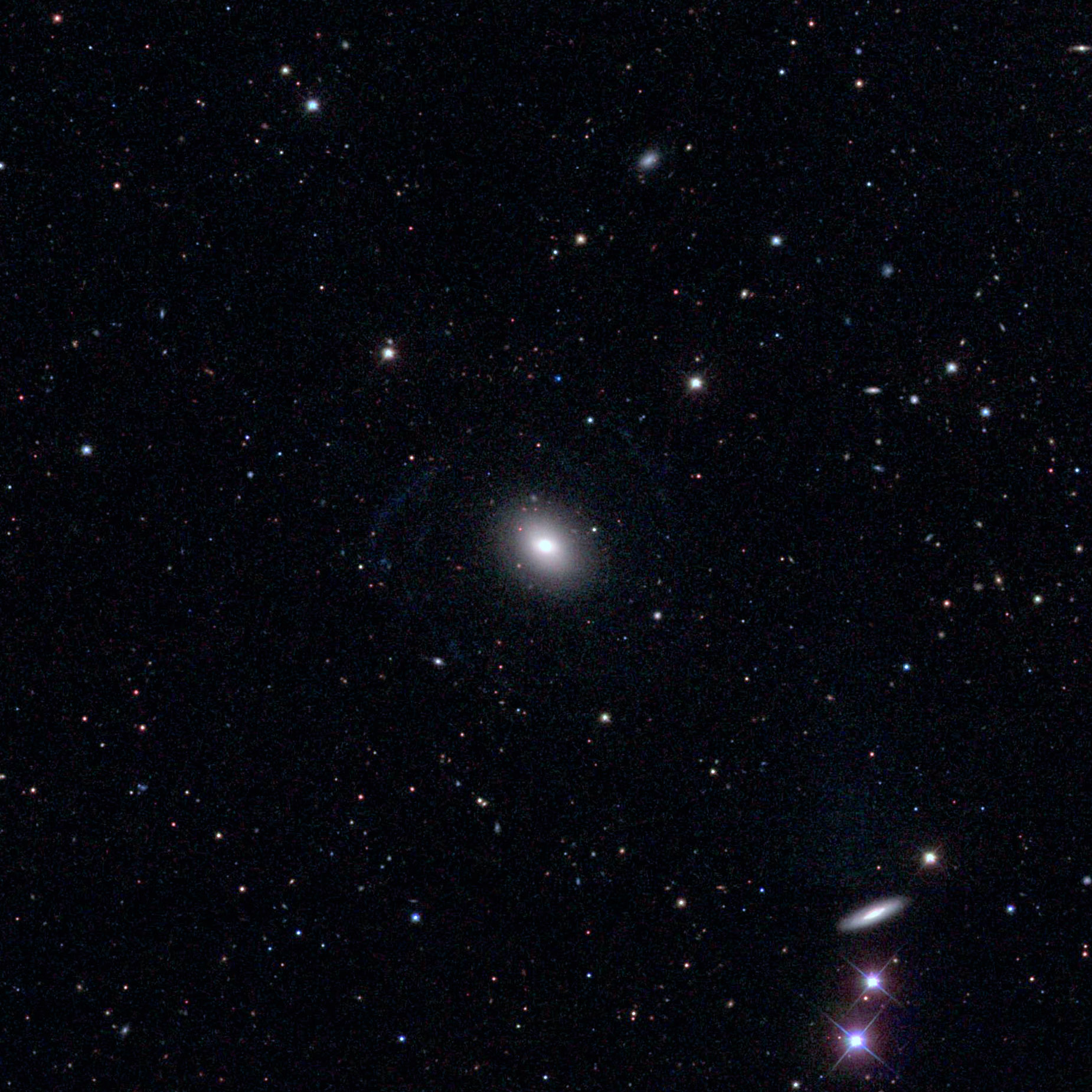
NASA's GALEX reveals the true nature of UGC 1382, dubbed the 'Frankenstein galaxy.' Scientists have discovered that UGC 1382 is a giant, and one of the largest isolated galaxies known.

click here for Figure 1 for PIA20695click here for Figure 2 for PIA20695click here for Figure 3 for PIA20695
Figure 1
High resolution TIFF file
Figure 2
High resolution TIFF file
Figure 3
High resolution TIFF file
Click on an individual image for larger views

The galaxy UGC 1382 has been revealed to be far larger and stranger than previously thought. Astronomers relied on a combination of ground-based and space telescopes to uncover the true nature of this "Frankenstein galaxy." The composite image shows the same galaxy as viewed with different instruments. The component images are also available.

In the image at left, UGC 1382 appears to be a simple elliptical galaxy, based on optical data from the Sloan Digital Sky Survey (SDSS). But spiral arms emerged when astronomers incorporated ultraviolet data from the Galaxy Evolution Explorer (GALEX) and deep optical data from SDSS, as seen in the middle image. Combining that with a view of low-density hydrogen gas (shown in green), detected at radio wavelengths by the Very Large Array, scientists discovered that UGC 1382 is a giant, and one of the largest isolated galaxies known.

GALEX in particular was able detect very faint features because it operated from space, which is necessary for UV observations because ultraviolet light is absorbed by the Earth's atmosphere. Astronomers also used Stripe 82 of SDSS, a small region of sky where SDSS imaged the sky 80 times longer than the original standard SDSS survey. This enabled optical detection of much fainter features as well.

Caltech in Pasadena led the GALEX mission, which ended in 2013 after more than a decade of scanning the skies in ultraviolet light. NASA's Jet Propulsion Laboratory, also in Pasadena, managed the mission and built the science instrument. Data for the 2MASS and WISE missions are archived at IPAC. JPL is managed by Caltech for NASA.

Download JPG
Download TIFF
Mission
Instrument
  • Sloan Digital Sky Survey (SDSS)
  • Very Large Array (VLA)
Credit
NASA/JPL/Caltech/SDSS/NRAO

Keep Exploring

The Blue Ring Nebula

Geometry of the Blue Ring Nebula (Animation)

Flaring Red Dwarf Star (Illustration)

Pulsar Candidate in Andromeda

Andromeda in High-Energy X-rays

After the Explosion: Investigating Supernova Sites

Galaxies Grow from Inside Out

Galaxy's Pencil-Thin Profile

Big Brother to the Milky Way

Ultraviolet Ring of Stars

About JPL
Who We Are
Directors
Careers
Internships
The JPL Story
JPL Achievements
Documentary Series
JPL Annual Report
Executive Council
Missions
Current
Past
Future
All
News
All
Earth
Solar System
Stars and Galaxies
Eyes on the News
Subscribe to JPL News
Galleries
Images
Videos
Audio
Podcasts
Apps
Visions of the Future
Slice of History
Robotics at JPL
Events
Lecture Series
Speakers Bureau
Calendar
Visit
Public Tours
Virtual Tour
Directions and Maps
Topics
JPL Life
Solar System
Mars
Earth
Climate Change
Exoplanets
Stars and Galaxies
Robotics
More
Asteroid Watch
NASA's Eyes Visualizations
Universe - Internal Newsletter
Social Media
Accessibility at NASA
Contact Us
Get the Latest from JPL
Follow Us

JPL is a federally funded research and development center managed for NASA by Caltech.

More from JPL
Careers
Education
Science & Technology
Acquisition
JPL Store
Careers
Education
Science & Technology
Acquisition
JPL Store
Related NASA Sites
Basics of Spaceflight
NASA Kids Science - Earth
Earth / Global Climate Change
Exoplanet Exploration
Mars Exploration
Solar System Exploration
Space Place
NASA's Eyes Visualization Project
Voyager Interstellar Mission
NASA
Caltech
Privacy
Image Policy
FAQ
Feedback
Version: v3.1.0 - 409b2d2
Site Managers:Emilee Richardson, Alicia Cermak
Site Editors:Naomi Hartono, Steve Carney
CL#:21-0018