
Becquerel Crater Deposit
Jet Propulsion Laboratory https://www.jpl.nasa.gov/ June 17, 2002

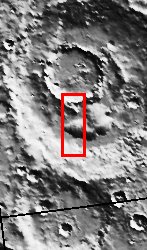
(Released 28 May 2002)
The finely layered deposit in Becquerel crater, seen in the center of this THEMIS image, is slowly being eroded away by the action of windblown sand. Dark sand from a source north of the bright deposit is collecting along its northern edge, forming impressive barchan style dunes. These vaguely boomerang-shaped dunes form with their two points extending in the downwind direction, demonstrating that the winds capable of moving sand grains come from the north. Grains that leave the dunes climb the eroding stair-stepped layers, collecting along the cliff faces before reaching the crest of the deposit. Once there, the sand grains are unimpeded and continue down the south side of the deposit without any significant accumulation until they fall off the steep cliffs of the southern margin. The boat-hull shaped mounds and ridges of bright material called yardangs form in response to the scouring action of the migrating sand. To the west, the deposit has thinned enough that the barchan dunes extend well into the deeply eroded north-south trending canyons. Sand that reaches the south side collects and reforms barchan dunes with the same orientation as those on the north side of the deposit. Note the abrupt transition between the bright material and the dark crater floor on the southern margin. Steep cliffs are present with no indication of rubble from the obvious erosion that produced them. The lack of debris at the base of the cliffs is evidence that the bright material is readily broken up into particles that can be transported away by the wind. The geological processes that are destroying the Becquerel crater deposit appear active today. But it is also possible that they are dormant, awaiting a particular set of climatic conditions that produces the right winds and perhaps even temperatures to allow the erosion to continue.