
Gallery .
.10 Things We Can Learn from Webb's First Images

Let's Take a Closer Look
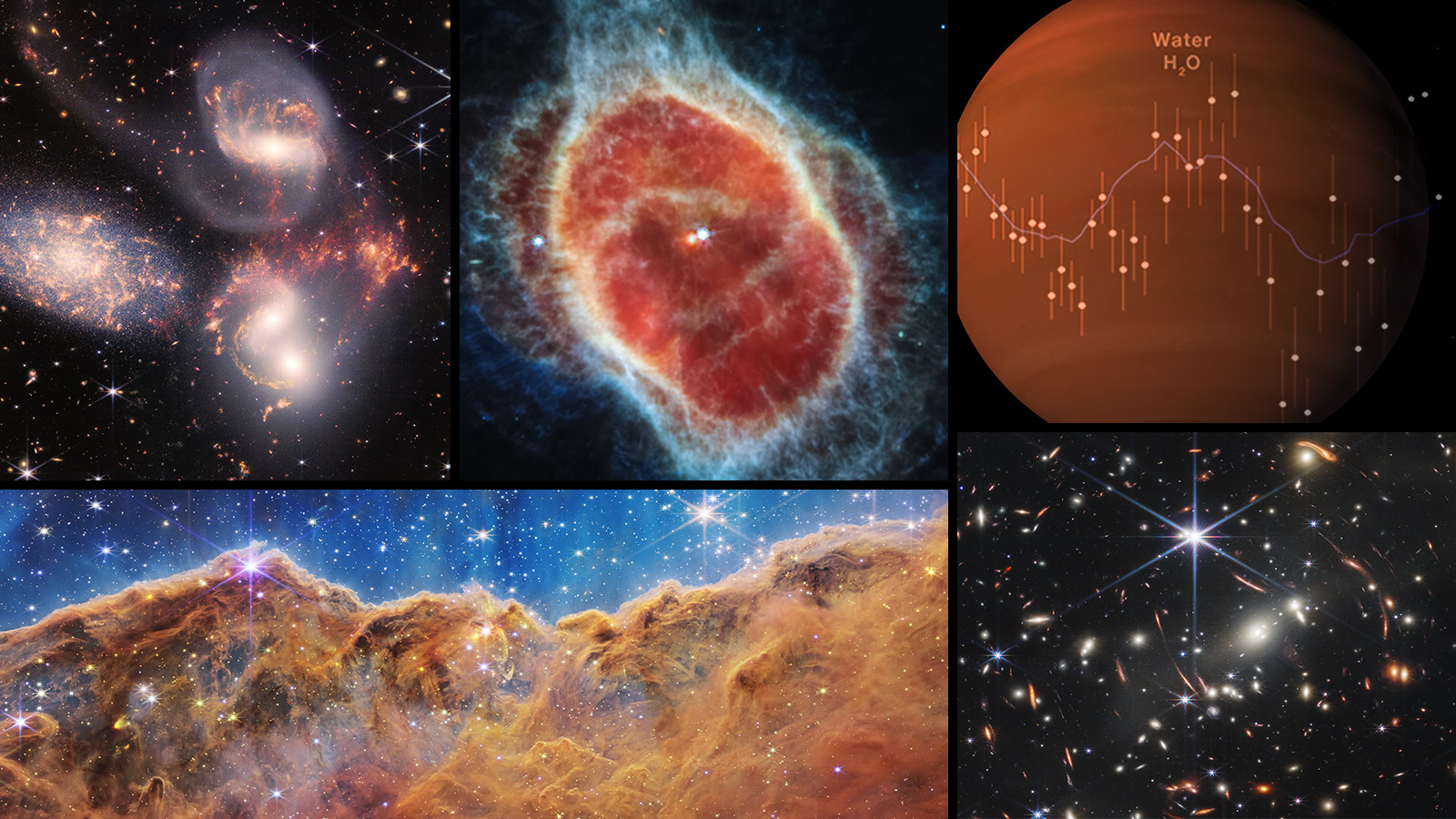
Everyone from scientists to artists to maybe even you have long awaited the first set of images from NASA’s James Webb Space Telescope, or JWST. Now that JWST's first images are here, let's take a closer look at how the clues within them are helping to answer some of astronomers' most burning questions. It's all in this slideshow along with hints about how future observations could help us further unfold the mysteries of the universe.
Credit: NASA, ESA, CSA, STScI | + Expand image

How JWST Sees the Universe
First, let's review how the James Webb Space Telescope peers into the universe. The most powerful space telescope ever built, JWST can see back to some of the earliest stages of the universe as it existed 13.5 billion years ago. To capture images of ancient, distant galaxies, the Webb telescope was built with tools sensitive to light in infrared wavelengths. In the video above and at these links, you can learn more about how the space telescope works as well as how JWST can see far back into space.
About the image: Illustration of the James Webb Space Telescope in orbit. Credit: NASA, ESA, CSA, STScI | + Expand image


Two Stars in the Same Nebula
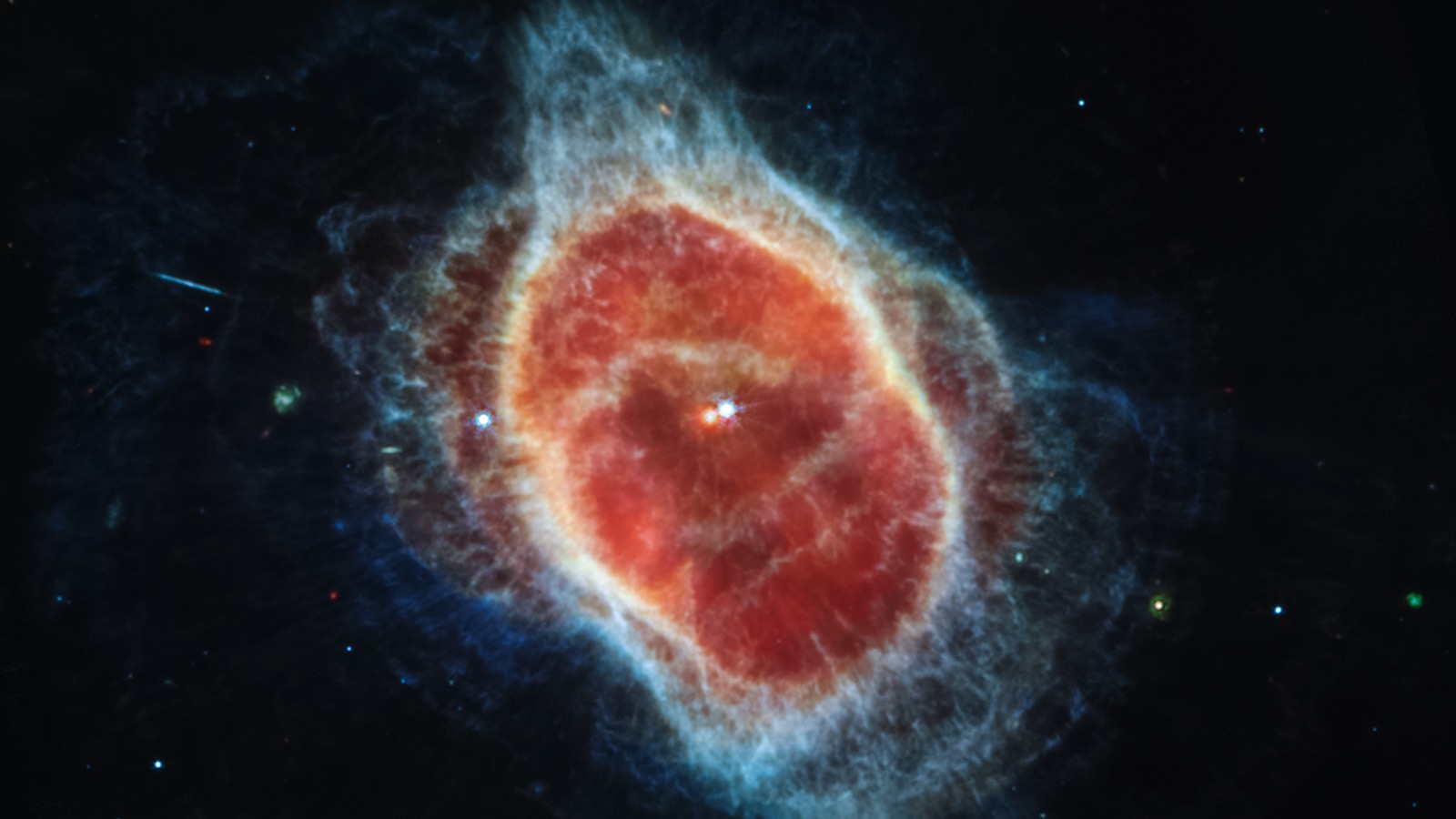
Hidden within the shell of gas and dust surrounding a star at the center of the Southern Ring Nebula is a second star never before seen. To the left of the bright star in the middle of the image is a white dwarf star, which is what creates a planetary nebula. The Webb space telescope's ability to peer through space dust in the infrared is what allowed it to capture the image of the hidden star. The younger, brighter star will likely cast off its own shell of gas and dust as its lifecycle ends someday.
Credit: NASA, ESA, CSA, STScI | + Expand image | › More about the image

Stars With Jet Power
Peering into the gas and dust of the Carina Nebula, JWST revealed numerous small stars with what are called protostellar jets. The jets are narrow streams of ultra-fast gas. Using this image, scientists can now count how many of these small stars have protostellar jets and learn more about how they affect the formation of other stars in the nebula.
Credit: NASA, ESA, CSA, STScI | + Expand image | › More about the image


Water Beyond Our Solar System
In addition to studying stars and galaxies, JWST is also looking at planets outside of our solar system, called exoplanets. Watch the video above to learn how the space telescope uses spectroscopy to study these planets.
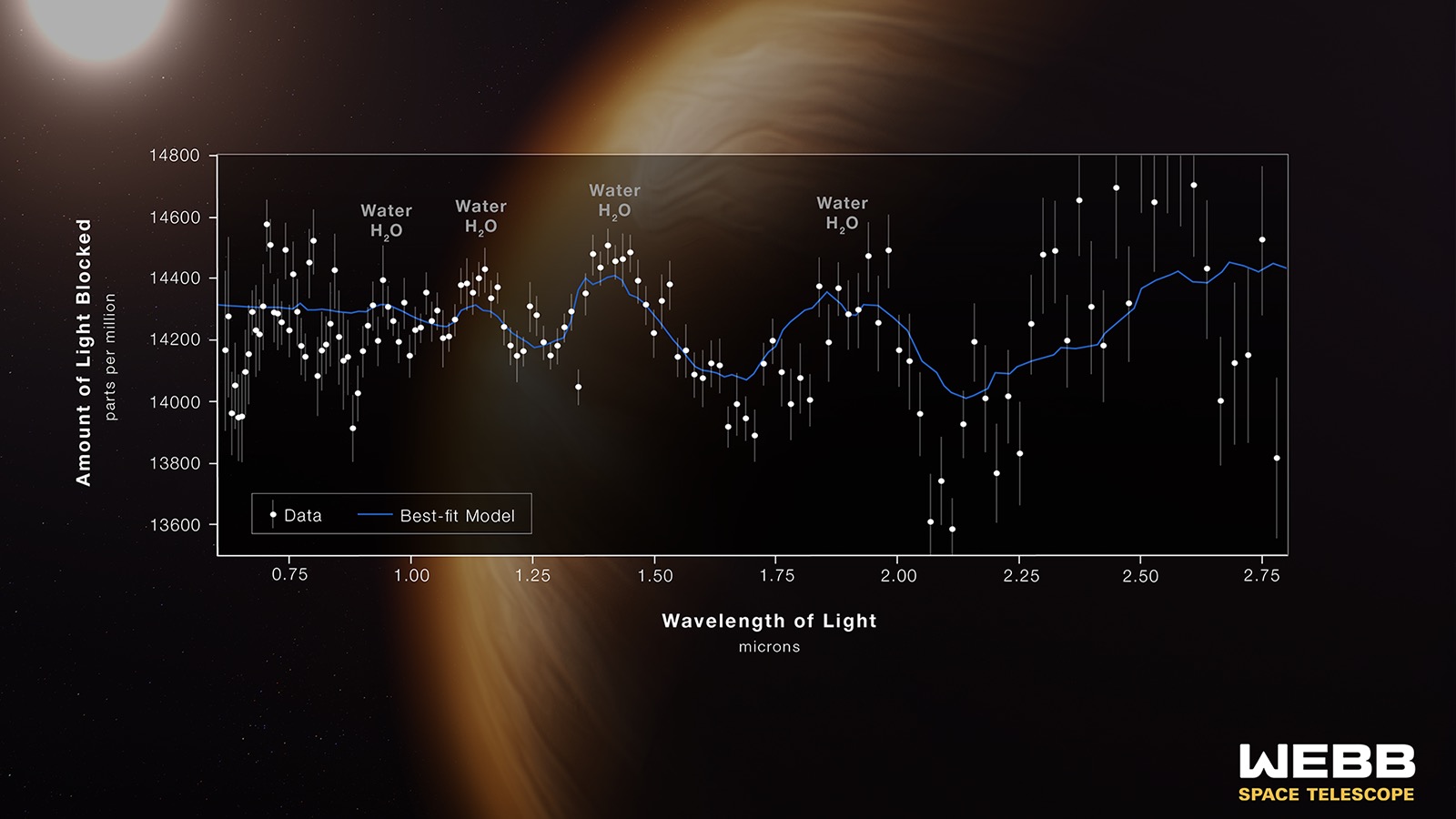
Among its first observations, the telescope captured a spectrum of light (shown on the next slide) from an exoplanet called WASP-96 b. The light represented on the spectrum passed from WASP-96 b’s star through the exoplanet’s atmosphere before reaching the telescope. The peaks on the spectrum showed clear signs of water in WASP-96 b's atmosphere. Scientists can now measure the amount of water in the atmosphere and even get hints about how, when, and where the planet formed.
About the image: A hypothetical rendering of WASP-96 b based on data collected by the Webb telescope.
Credit: NASA Eyes on Exoplanets | › Learn more on NASA's Exoplanet Catalog

A Spectrum of New Findings
While the peaks on the spectrum clearly indicate that there is water in WASP-96 b's atmosphere, the heights of those peaks are lower than scientists expected. When clouds are present, they can reduce the peaks in the spectrum created by water vapor. This means that the lower peaks on the spectrum from WASP-96 b provide evidence for the presence of clouds on the exoplanet.
The gradual slope on the left side of the spectrum also suggests that there is haze in the exoplanet's atmosphere, something scientists didn’t think existed on the planet.
Credit: NASA, ESA, CSA, STScI | + Expand image | › More about the image

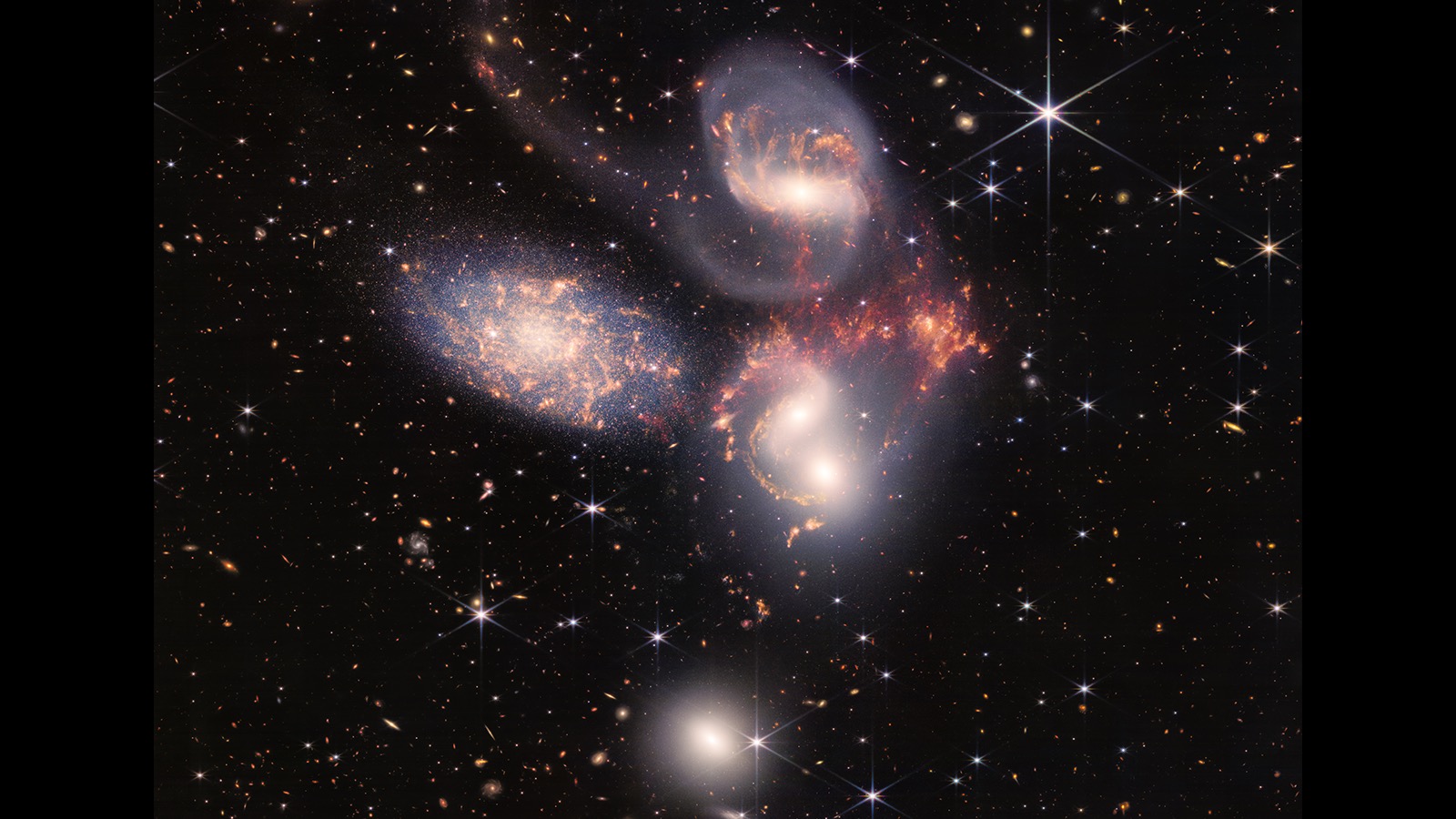
Black Hole Feeding Frenzy
Each galaxy in Stephan’s Quintet, shown here, contains a galactic core, a dense center filled with stars, dust, UV light, and x-ray radiation, among other things. Spectra captured by JWST show hot gases like iron, argon, neon, sulfur and oxygen being stripped of their electrons by wind and radiation from a supermassive black hole in the topmost galaxy’s core. Seeing this in action is helping scientists learn about the rate at which supermassive black holes feed and grow.
Credit: NASA, ESA, CSA, STScI | + Expand image | › More about the image

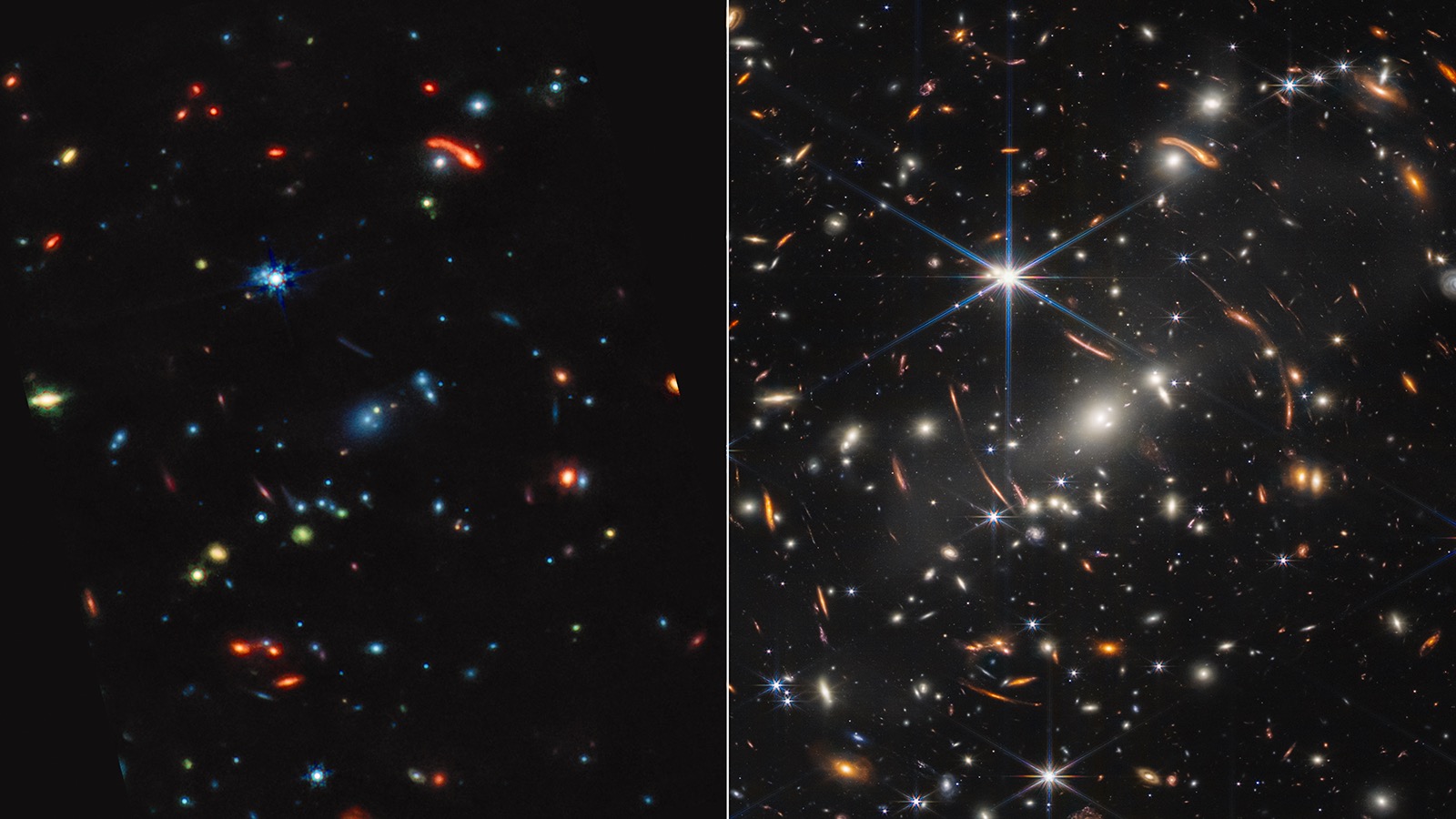
Thousands of Galaxies in a Grain of Sand
If you were to hold a single grain of sand at arm's length, you could cover the entire area of space taken up by each of these images, which contain thousands of galaxies! The colors in these images of the galaxy cluster known as SMACS 0723 help scientists learn more about the objects shown.
In the image on the right, which was taken using near-infrared light, you can see the cluster as bright white galaxies in the center and smaller white galaxies throughout. In the image on the left, which was captured in mid-infrared, red objects contain thick dust layers. Blue galaxies contain stars but not much dust, which means they’re older and don’t have as much material left to make new stars. And green objects have dust filled with hydrocarbons and other compounds.
Credit: NASA, ESA, CSA, STScI | + Expand image | › More about the image

Looking Back Billions of Years
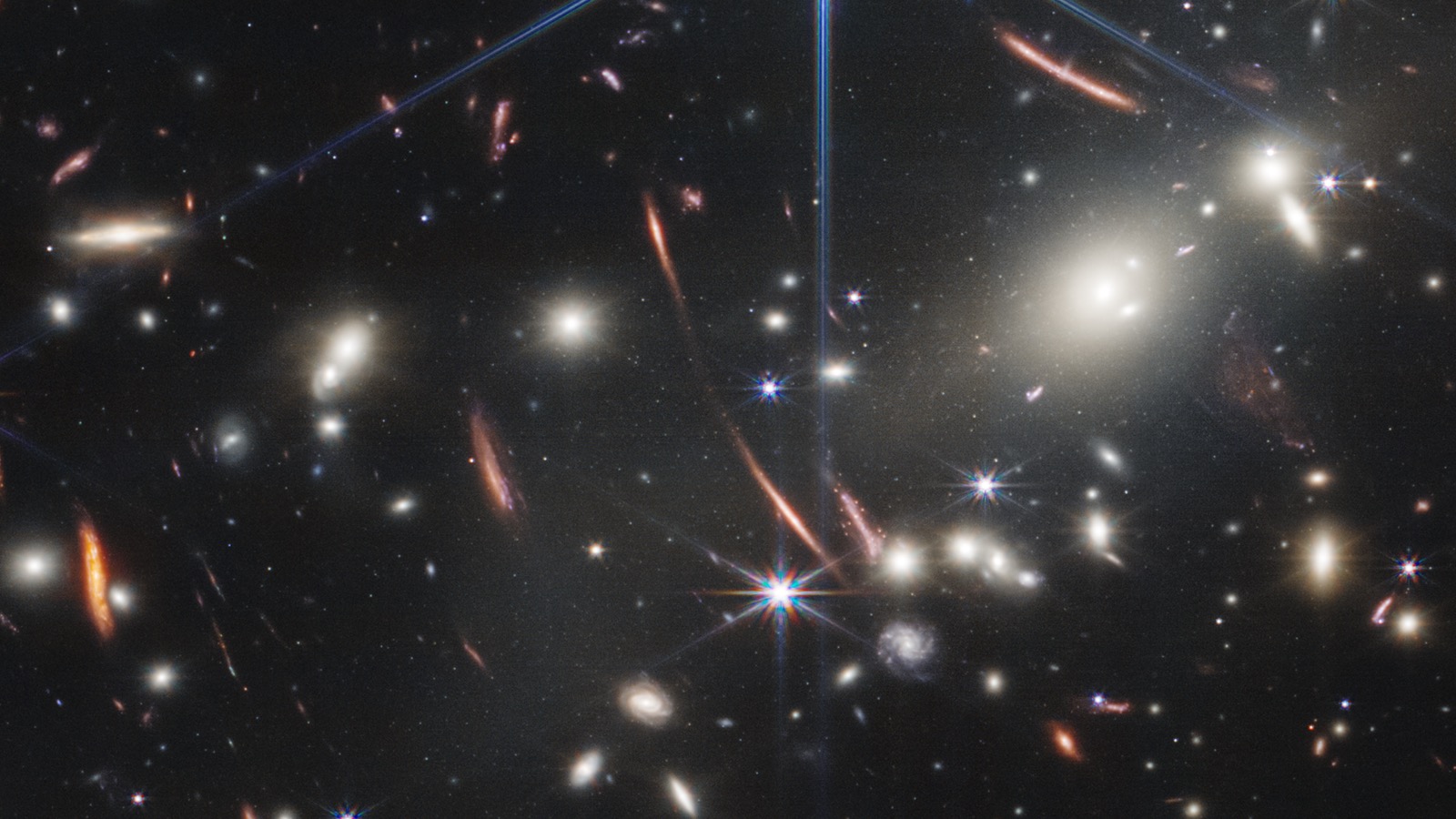
The bright white galaxy at the center of this image and smaller white galaxies throughout appear as they did 4.6 billion years ago. That's how long it took the light from this galaxy cluster to reach the Webb telescope. The oldest-known galaxy identified in the image is 13.1 billion years old, which means its light was emitted when the universe was young – just several hundred million years old.
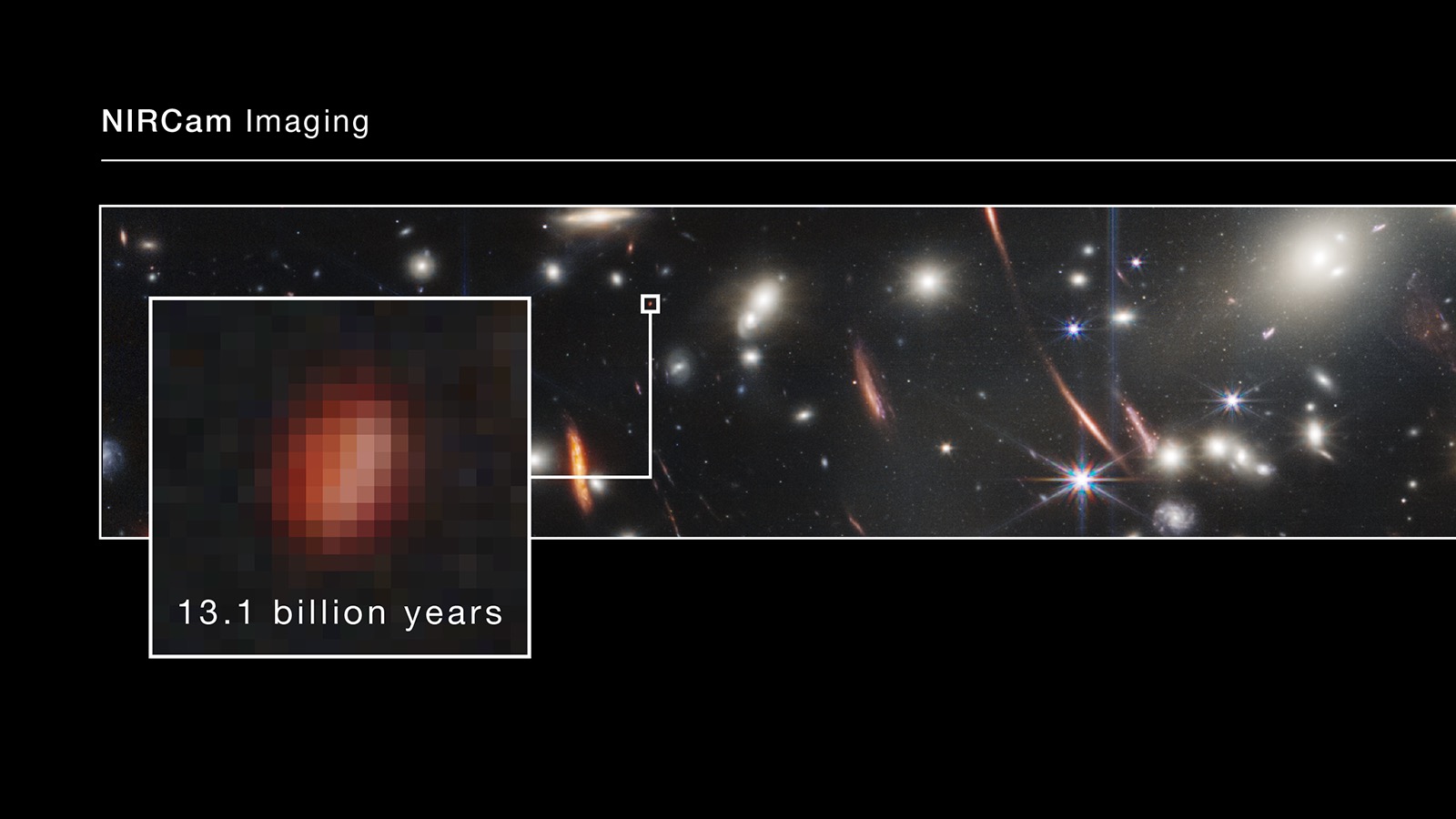
Credit: NASA, ESA, CSA, STScI | + Expand image | › More about the image


Gravity as a Magnifying Glass
Many galaxies in this image appear stretched or warped. This is the result of a phenomenon known as gravitational lensing. It happens when the combined gravity of closer galaxies bends and magnifies the light from distant galaxies in the background. Gravitational lensing provides a more detailed view of distant galaxies that allows scientists to measure the ages of star clusters within the galaxies.
Credit: NASA, ESA, CSA, STScI | + Expand image | › More about the image
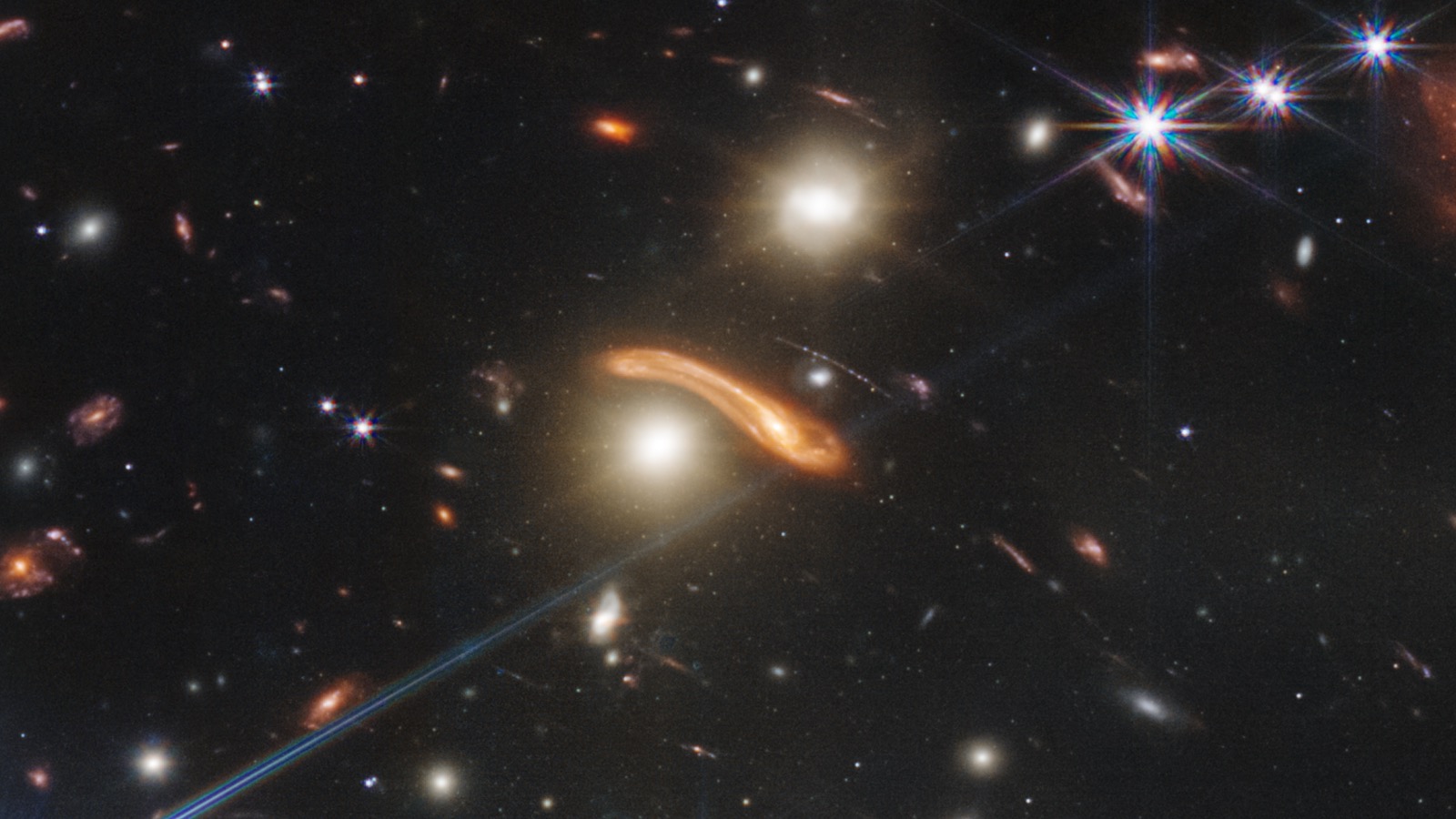

Seeing Reflections in Space
While some galaxies are warped by gravitational lensing, others are mirrored and show up multiple times in the same image. A large distinct orange arc in the center of this image is actually a mirrored galaxy. Each galaxy shows up twice in the arc. JWST’s ability to measure multiple objects at the same time showed that both galaxies in the arc contain the exact same material and are the same age, which allowed scientists to confirm that these were, in fact, mirrored galaxies.
Credit: NASA, ESA, CSA, STScI | + Expand image | › More about the image