
Gallery .
.Exploring Jupiter
Mankind has been studying Jupiter for more than 400 years. But we've only been sending spacecraft there since the 1970s! Nine spacecraft have visited Jupiter since 1973, and they've discovered a lot about the planet. Flip through the slideshow below to find out about these spacecraft and what they've discovered.

Page from "The Starry Messenger" by Galileo Galilei describing Galileo's observations of moons orbiting Jupiter with drawings showing a circle representing Jupiter and asterisks representing the moons
1610: A Stellar Discovery
The first person to truly study Jupiter was Galileo Galilei. Galileo lived in Italy during the early 1600s and studied the sky by inventing new, more powerful telescopes that could see farther into space. In 1610, he turned his most powerful telescope yet toward Jupiter and discovered something amazing: four moons orbiting the planet. (The moons, now called the Galilean moons in honor of their discoverer, are the largest of Jupiter's satellites: Io, Europa, Ganymede and Callisto.) There were no cameras in Galileo's time, so instead he used pen and paper. The image above shows a page from a book written by Galileo called "The Starry Messenger." Along with written text (in Italian) are woodcut and engraved illustrations representing his observations of Jupiter and the Galilean moons.
Galileo's discovery was an important one because, during his time, most people in the Western World believed that Earth was the center of the universe and that all the objects in the solar system revolved around it. But Galileo's discovery proved that was not the case. Even so, it took many years before people accepted the model of the solar system as we know it today.
Visit the Library of Congress website to view the full page and book

Pioneer 10 photo of Jupiter
1973: Getting Up Close to Jupiter
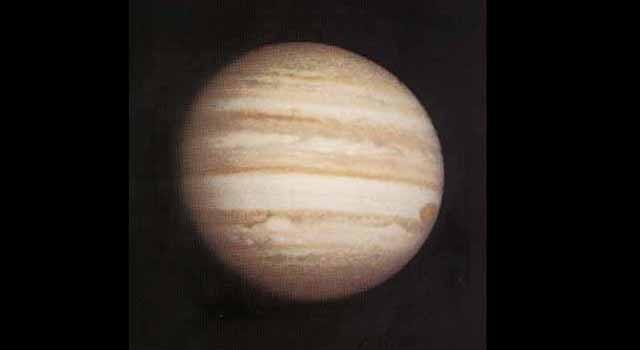
The first spacecraft to cross the asteroid belt and study Jupiter up close was Pioneer 10. While it didn't go into orbit around the planet, Pioneer 10 took hundreds of photos and collected measurements that helped scientists better understand Jupiter's surroundings. The picture above was created with images taken by the spacecraft as it flew toward Jupiter on December 3, 1973 – one day before its closest approach.

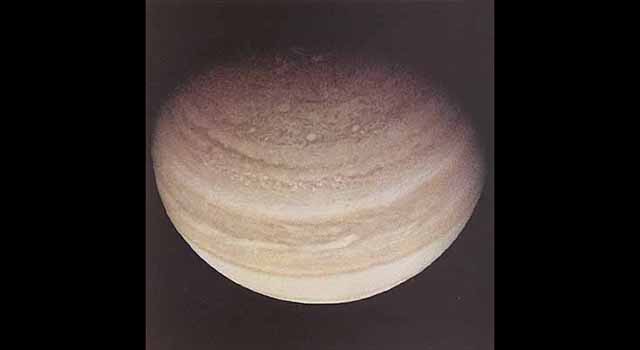
Pioneer 11 photo of Jupiter's north pole
1974: Jupiter From Top to Bottom
The first photos of Jupiter's far north came from the Pioneer 11 spacecraft. It flew by Jupiter in 1974 while on its way to Saturn and got three times closer to the planet than Pioneer 10. The image above shows Jupiter's north pole and was taken as Pioneer 11 was leaving Jupiter and heading toward Saturn.

Animated video showing Voyager 1's approach to Jupiter
1979: Storms and Rings on Parade
Saturn isn't the only planet with rings. In 1979, while passing by Jupiter, the Voyager 1 and 2 spacecraft found faint rings around Jupiter, too. The spacecraft also took thousands of photos that showed how clouds and storms move across the planet and how the mysterious Great Red Spot is actually a gigantic storm. The time-lapse video above was taken as Voyager 1 flew toward Jupiter and shows the planet's clouds and storms churning.
Voyagers 1 and 2 also found dozens of volcanoes on Jupiter's moon Io. It was the first time anyone saw active volcanoes on another world. And it turns out the effects of those volcanoes spread far and wide across the Jupiter system.


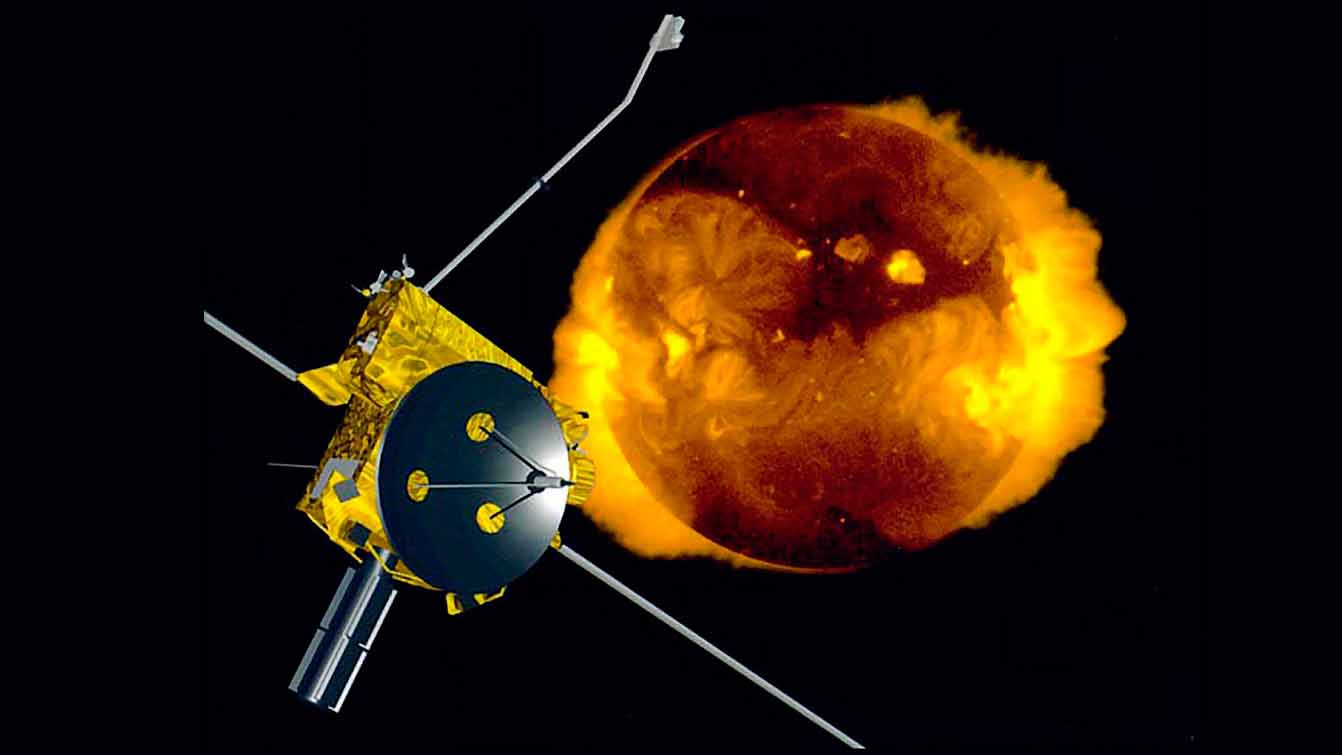
Artist's illustration of Ulysses at the sun
1992: A Pit Stop at Jupiter
The Ulysses spacecraft was built to study the sun, so why did it fly by Jupiter in 1992? Jupiter is so massive that it works kind of like a slingshot for spacecraft that fly by. To reach its final destination, Ulysses first had to pick up speed at Jupiter. But the spacecraft didn't just fly by. It did some sightseeing, too! There was no camera on Ulysses, but it used its science instruments to study Jupiter's magnetic field and find out what effects the sun has so far away.

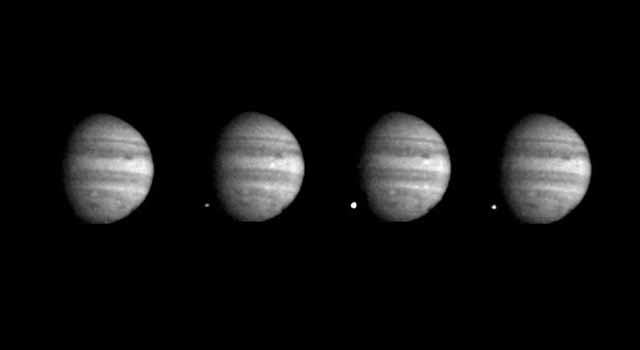
Series of photos from Galileo showing comet Shoemaker-Levy 9 colliding with Jupiter
1994: Jupiter Takes a Hit
Before it even got to Jupiter, the Galileo spacecraft took some of the first pictures of a comet colliding with a planet! In 1993, scientists discovered that pieces of a comet called Shoemaker-Levy 9 were orbiting Jupiter. After studying the path of the comet fragments around Jupiter, they predicted the pieces would impact the planet in 1994. They were right. Luckily, Galileo and the Hubble Space Telescope were ready to capture the impact. The series of photos above show Galileo's view as the comet collided with Jupiter.

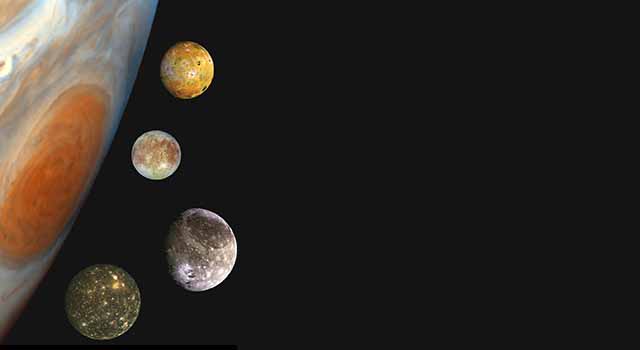
Portrait of Jupiter, Io, Europa, Ganymede and Callisto made with photos from Galileo
1996: Going Below the Clouds
A lot of what we know about Jupiter and its moons comes from the Galileo spacecraft. Galileo was the first spacecraft to orbit Jupiter, meaning it didn't just fly by, it spent almost eight years circling the planet. It also dropped a probe below Jupiter's clouds, which helped scientists learn about the planet's atmosphere. The probe only lasted about an hour before it was melted by the heat deep in Jupiter's atmosphere. The image above was made with photos taken by Galileo of Jupiter's Great Red Spot and the four Galilean moons (from top to bottom) Io, Europa, Ganymede and Callisto.

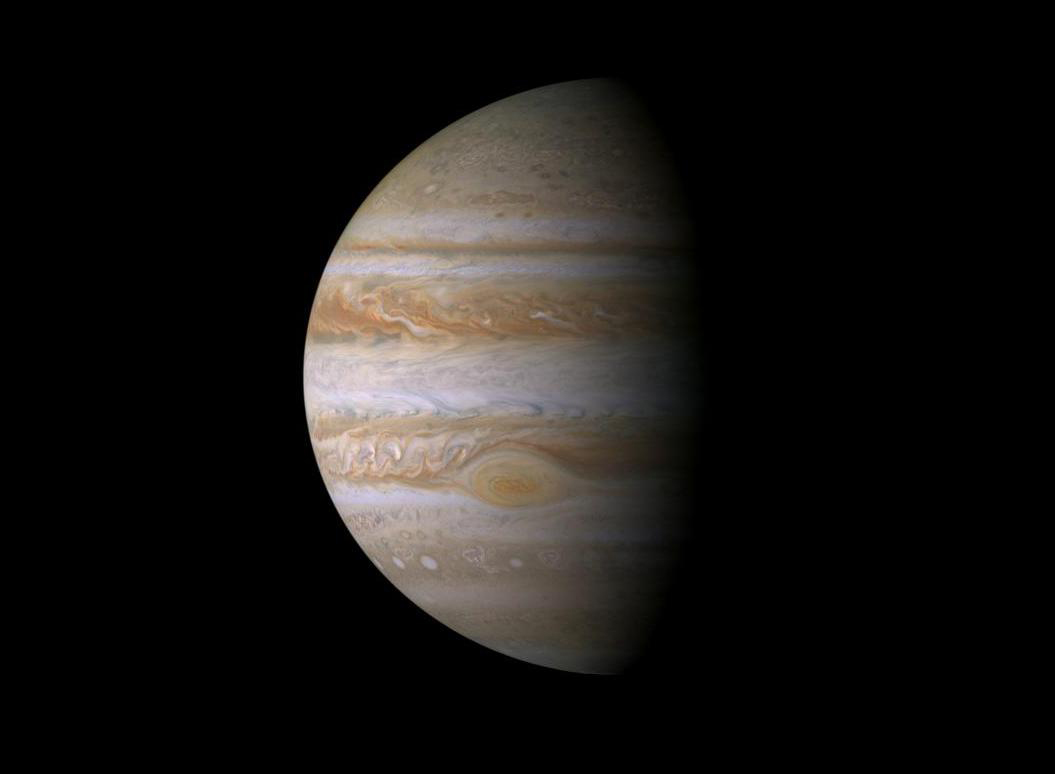
Cassini image of Jupiter
2000: Scenic Lookout
While on its way to Saturn, the Cassini spacecraft took some of the best photos we have of Jupiter and helped scientists learn more about the planet's colorful swirling features. The photos were just a test to make sure Cassini's instruments were working as planned. But the photos – around 26,000 of them! – ended up giving scientists amazing new information about Jupiter's clouds. The image above was made by combining 27 of Cassini's photos of Jupiter into one huge picture of the whole planet.

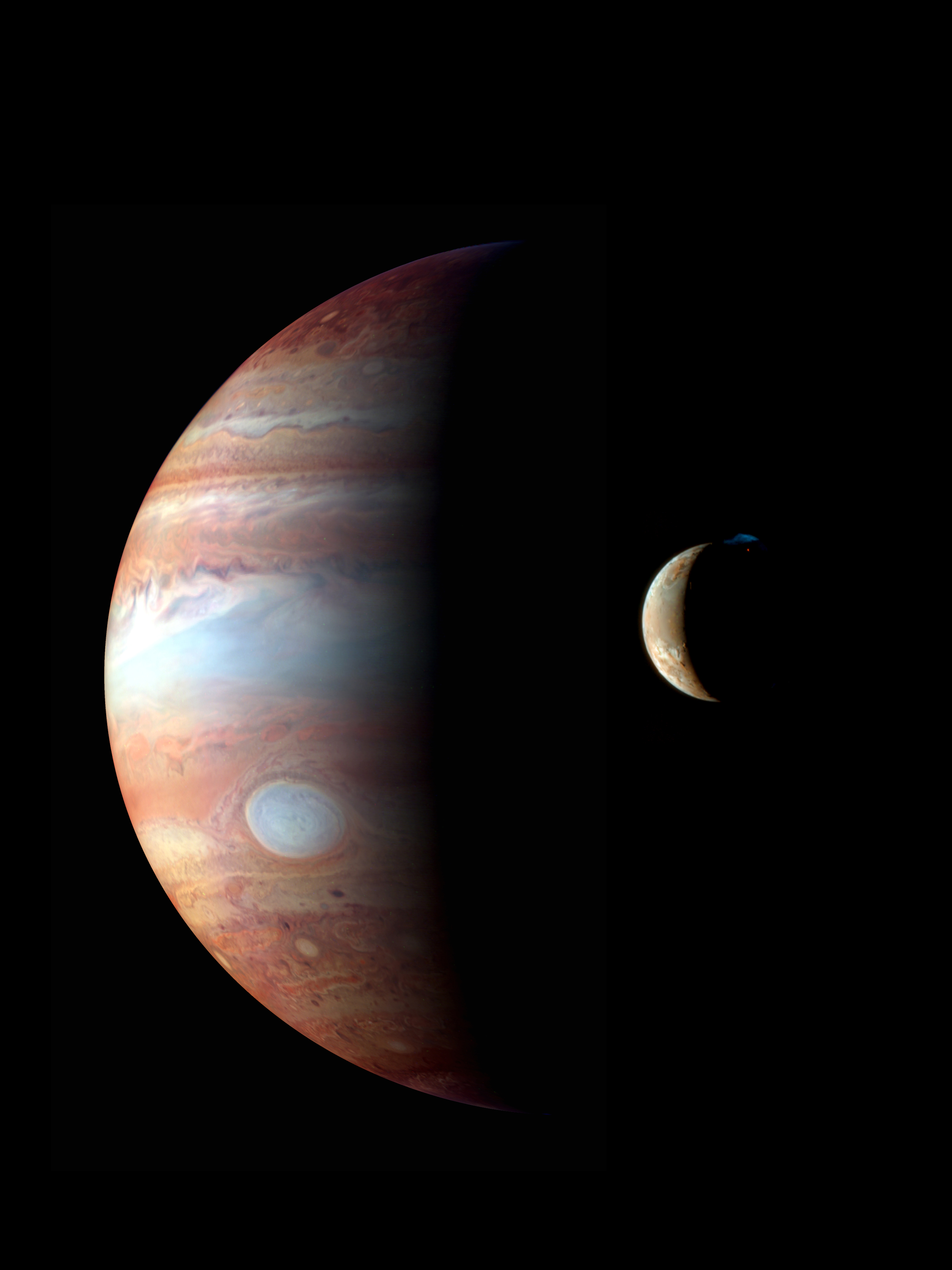
New Horizons false color image of Jupiter and Io
2007: What's the Weather Like?
The New Horizons spacecraft was on a long journey to Pluto when it passed by Jupiter in 2007. The spacecraft was the eighth to visit Jupiter, but scientists still had big questions about the planet. One of the biggest questions was "What's the weather like there?" You may be wondering why the colors in the photo above look different than what you're used to seeing in images of Jupiter. Those "false colors" (Jupiter isn't really those colors) are used to help scientists see what Jupiter's clouds are made of and what kind of weather they might create. This image was created from photos taken by New Horizons as it flew by Jupiter and also shows Jupiter's volcanic moon Io.

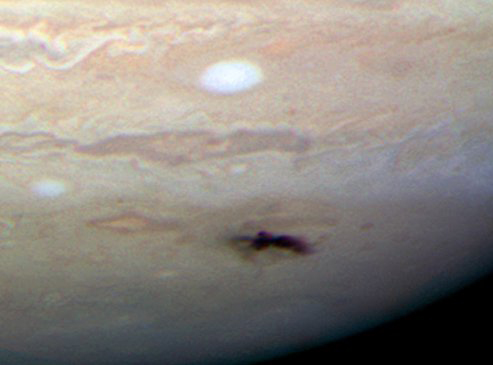
Hubble Space Telescope photo of a scar on Jupiter caused by a comet impact
2009: Another Impact!
In 2009, scientists got another chance to study what happens when a comet hits Jupiter. An amateur astronomer named Anthony Wesley was looking through photos he had taken through his telescope and discovered a huge black spot on Jupiter. It was a bruise the size of Earth's Pacific Ocean from a comet impact. The image above from the Hubble Space Telescope shows the dark scar from the impact.
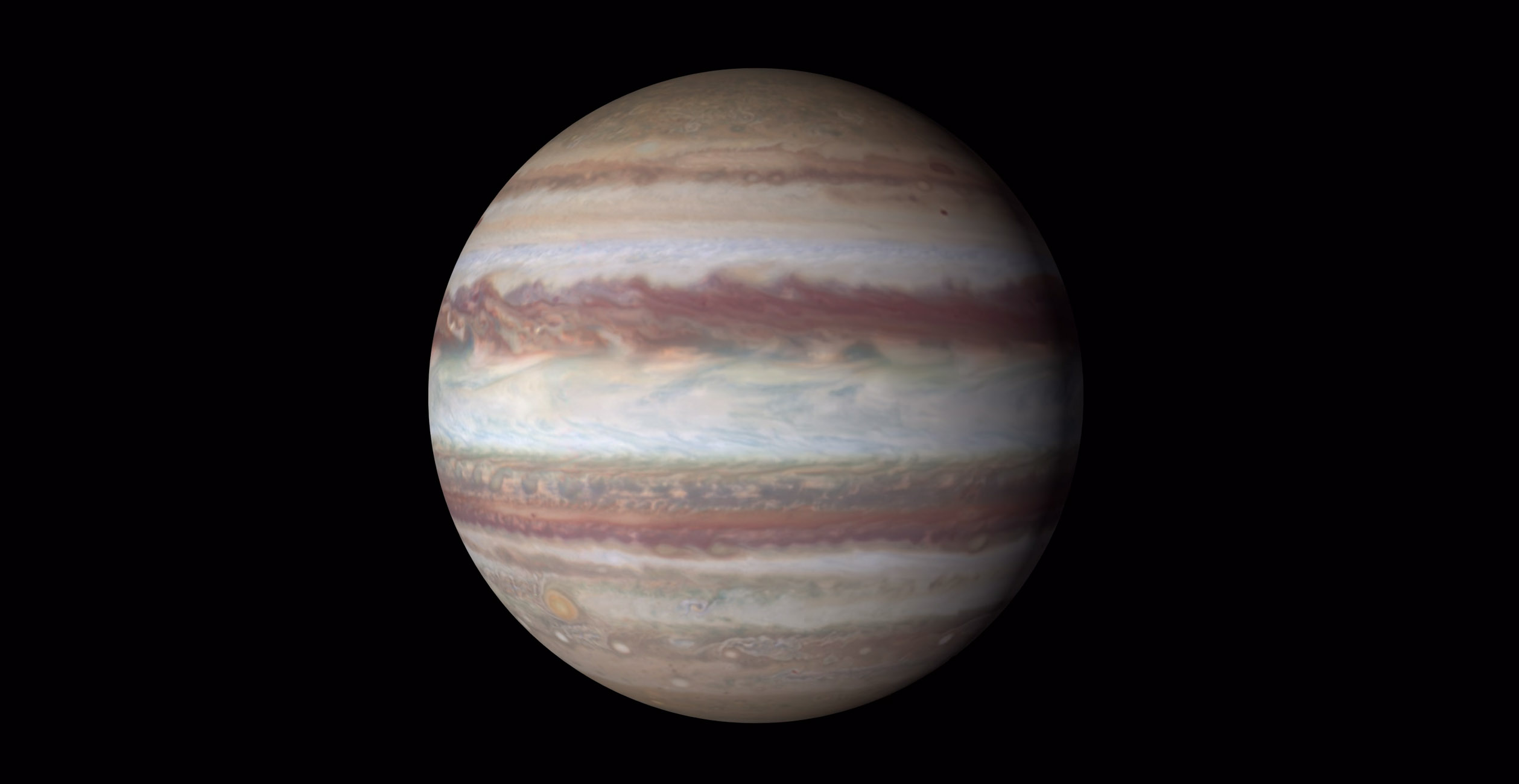
This spinning globe of Jupiter was made from observations performed with NASA’s Hubble Space Telescope.
2015: Jupiter Like Never Before
In 2015, the Hubble Space Telescope started a project to photograph Jupiter, Saturn, Uranus and Neptune once each year to see how they change. This video of Jupiter was made with photos taken by the Hubble Space Telescope during the first year of the project. The photos helped scientists make new discoveries about the waves in Jupiter's clouds. And they also showed that Jupiter's most famous feature, a huge spinning storm called the Great Red Spot, is getting smaller and smaller.

Intense swirls of clouds cut across Jupiter's colorful stripes of clouds and gas and move from from the bottom of the image to the top in this up-close side-view of Jupiter.
2016: Closer Than Ever
A brand new spacecraft arrived at Jupiter in 2016. It's called Juno, and it's only the second spacecraft to orbit the planet. Juno is getting closer to Jupiter than ever before to study what's below the clouds. The mission wants to figure out how Jupiter is put together and how it came to be that way. Scientists think the giant planet's story holds clues about the early history of our solar system.
The spacecraft's camera, called JunoCam, sends what are called raw images back to Earth. These raw images are available on the Juno mission website for anyone to download and make their own. Some people might choose to use the images for artistic purposes while others, known as citizen scientists, will highlight details that help scientists learn more about Jupiter. In 2019, citizen scientists Kevin M. Gill created this image using raw images from JunoCam. It shows intense swirls of clouds in Jupiter's stormy northern hemisphere.

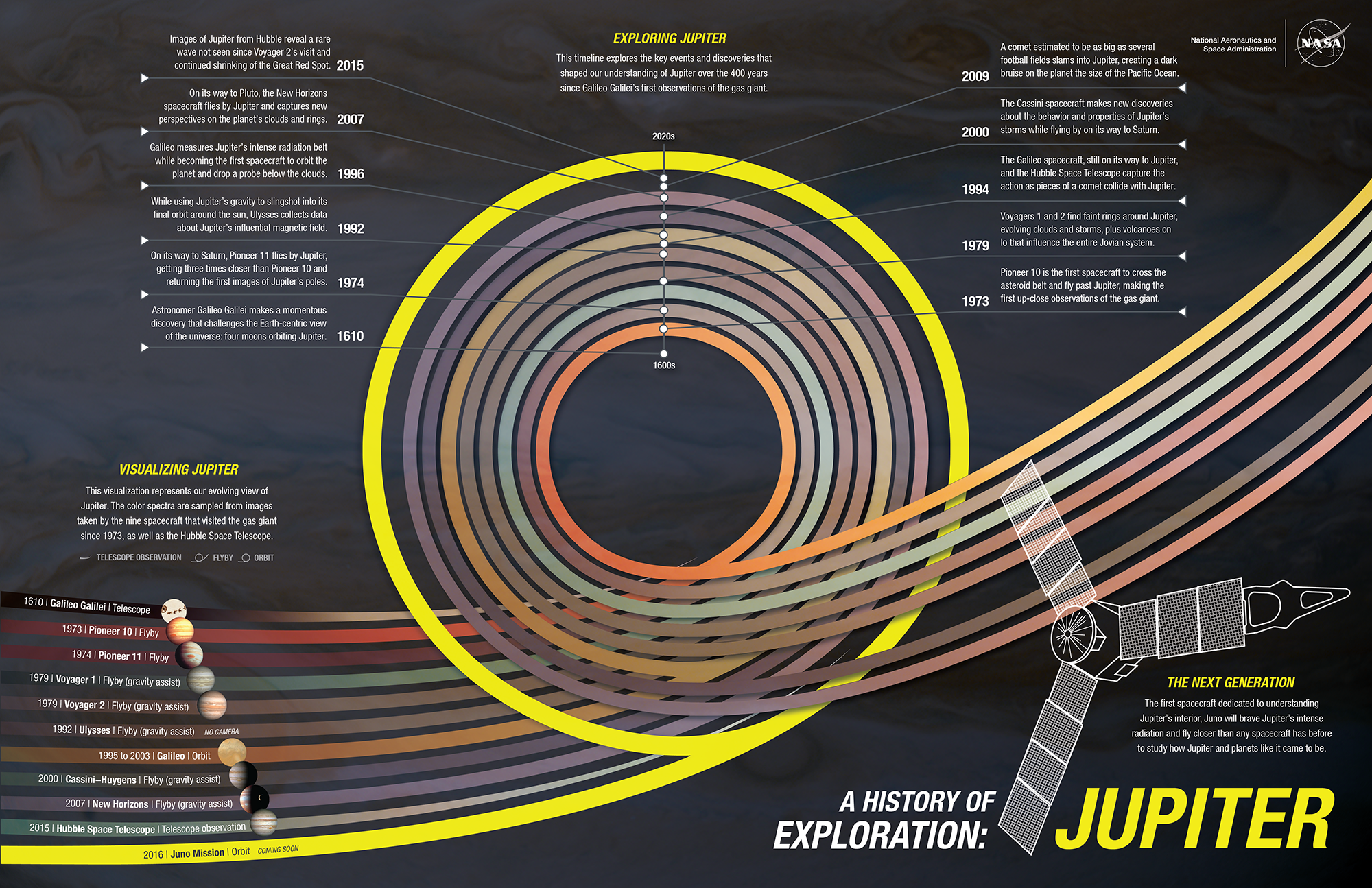
Graphic illustrating the history of exploration at Jupiter
Jupiter Exploration Poster
This free poster from NASA shows all the missions that have visited Jupiter. It also features some of the most exciting discoveries about Jupiter over the last 400 years. Download it and print it out!