
Slice of History: The Rover That Refused to Quit

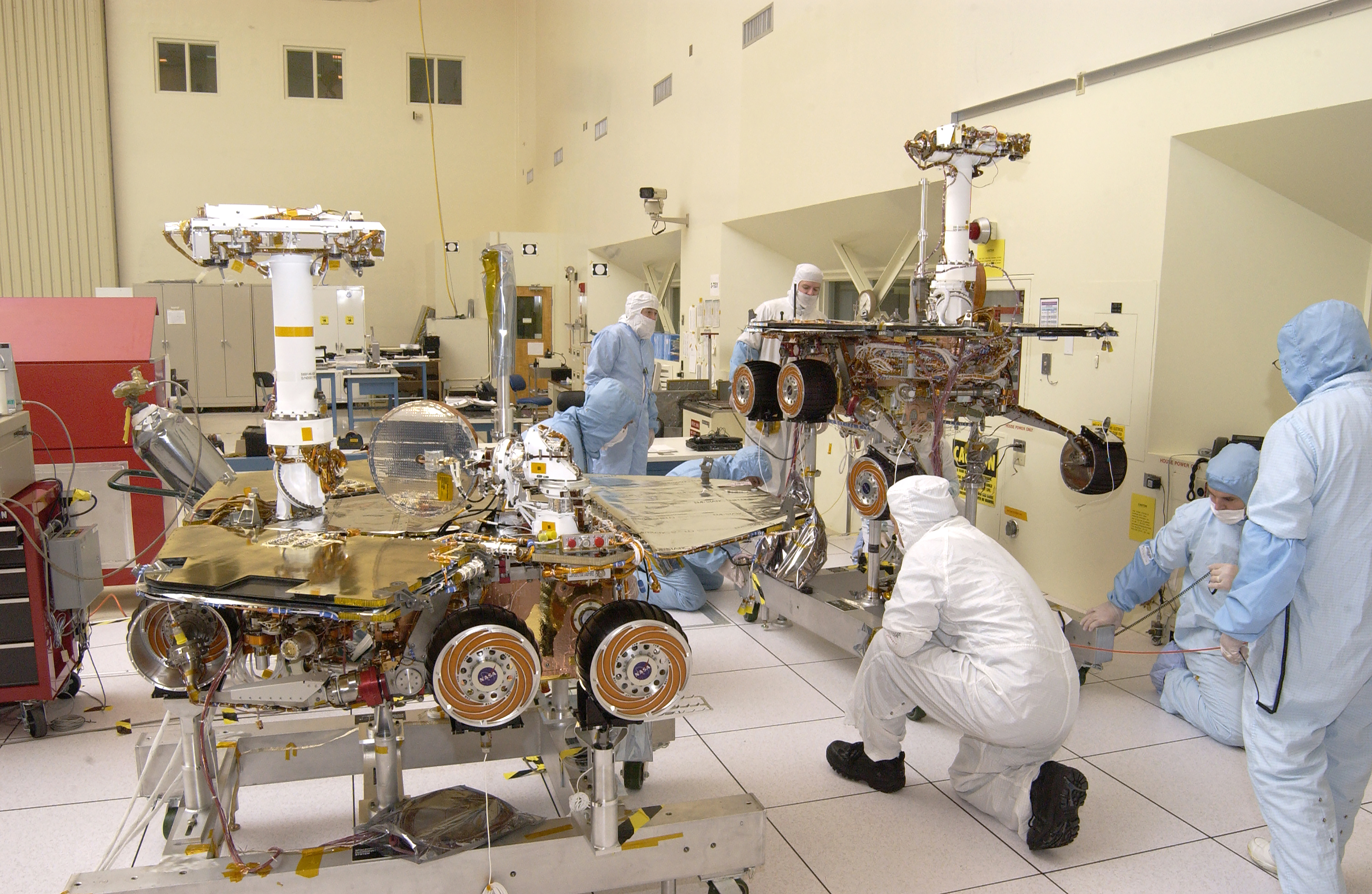
On Jan. 24, 2004, NASA’s Mars Exploration Rover Opportunity began a journey that would far outlast its planned 90-day mission. After a seven-month cruise from Earth, the rover plunged into the Martian atmosphere, deployed its parachute, and then bounced across the surface inside a cocoon of airbags before coming to rest in Meridiani Planum.
“NASA’s second Mars Exploration Rover successfully sent signals to Earth during its bouncy landing and after it came to rest on one of the three side petals of its four-sided lander,” JPL reported the following day. The first signal from the surface reached mission engineers at JPL at 9:05 p.m. PST, prompting Mars Exploration Rover landing-system manager Rob Manning to announce to the cheering flight team: “We’re on Mars, everybody!”
Opportunity’s landing site had been chosen for a reason. Orbiting spacecraft had detected deposits of crystalline hematite, a mineral that commonly forms in the presence of liquid water. Within hours of landing, Opportunity’s first images revealed a dark, cratered landscape unlike any previous Mars landing site, including an exposed rock outcrop that would become one of the rover’s first scientific targets.
Just days later, Opportunity rolled down a ramp and onto the Martian surface. It was the first time two mobile robots were exploring another planet simultaneously: Opportunity at Meridiani Planum and its twin, Spirit, at Gusev Crater. The pair were designed to search for evidence of water and help scientists understand whether Mars had ever possessed environments capable of supporting life.
What began as a mission planned to last just 90 Martian days became one of the most remarkable journeys in planetary exploration. Opportunity ultimately spent nearly 15 years on Mars, traveling more than 28 miles and uncovering compelling evidence that ancient Mars was once wetter and potentially habitable. Its discoveries included sedimentary rocks formed in ancient watery environments, hematite-rich “blueberries,” and later evidence of water that moved through underground fractures.
Today, Opportunity’s legacy extends well beyond the rover itself. Its unprecedented longevity and discoveries transformed our understanding of Mars while demonstrating the possibilities of long-duration robotic exploration, setting the stage for the increasingly capable rovers and spacecraft that followed.
Want to learn more about the history of JPL?
The content presented here should be viewed in the context of the time period. Our intent is to present the history of JPL in a factual manner that uses primary resources and historical context. We recognize that some information or images do not reflect the current values, policies, and mission of JPL.
CL#26-3372